Which Is Better, Lalita’s Facial Oil or Facelift Cream?

In this gift basket we give you a choice between Lalita’s Facial Oil and Lalita’s Facelift Cream.  Both provide deep oleation, which is important to get to the root of dryness in the skin.  Healthy skin needs both water and lipid to maintain proper moisture.  Lipid is especially important because it protects the water in the skin from evaporation.

For everyday dryness, use Lalita’s Facial Oil.  Its contains very fine, micro-molecules of lipid which penetrate into the skin to nourish the lipid layers.  For deeper wrinkles, or deeper dryness, use Lalita’s Facelift Cream.  This lipid-based cream goes even deeper than Lalita’s Facial Oil and provides more lubrication to the skin.  It also takes longer to penetrate the skin and should only be used at night so that it has many hours to be absorbed.

Lalita’s Facial Oil is very light and fine for oleating the face without clogging.  It can be used during the day without giving an oily appearance to the skin.  For deeper nourishment or deep wrinkles, Lalita’s Facelift Cream is best to use before bed.  Daytime use would make the face look oily.

Does Your Health Take A Nosedive When You Travel?

All your muscles ache, and you don’t care if you ever eat again.  The thermometer reads 101 as you lie on the bed feeling sorry for yourself.

You traveled 3,000 miles to be here with everyone, and now you can’t even attend the party.  What will you do for the holiday meal, look over from the couch and watch the others eat?

There’s nothing worse than being sick when you travel.

It’s easy to avoid sickness when you travel by following these tips:

Keep Your Channels Open

Prana is corrupted when you travel, especially when you are flying.  The body tries to restrict the corrupted prana from entering the body by closing the nadis (vibrational channels).

This puts pressure on the nadis and slows the flow of prana in the body. The digestive system, bowel movements and ojas are all adversely affected.  Immunity goes low, making you susceptible to viral infections.

If you want to stay healthy when you travel, you have to keep the channels open:

  1. Use a Nadi opening spray  (e.g.: Flex’nFlow Body Mist) on your palms and inhale during the flight.
  2. Use a good nasya oil (for example Ida Pingala Oil) to your nostrils during the flight.
  3.  Practice gentle deep breathing at regular intervals to keep the nasal passages open.
  4. Avoid ice cold drinks, sodas, cold foods, and raw foods, all of which block the channels.

Prepare Yourself For Travel

Sometimes you don’t have much choice, but wherever possible get extra rest before you travel.  Plan ahead for all the last minute things that must be done before you go.

Don’t stay up late the night before.  If you can get to bed early for a few nights before you travel, your nadis (vibrational channels) will naturally be open and your immunity will be strong.

Try to avoid red-eye flights and late night arrivals whenever possible

Airports and airplanes are full of the highest EMF/EMR.

Prepare your nadis for this by getting a spinal treatment (with Flex’n Flow Transdermal Cream) before you leave.  (You can get a professional treatment session with one of Vaidya Mishra’s Shaka Vansya Ayurveda practitioners or you can have a friend swipe your spine several times from top to bottom with the cream).

Also, use Flex’n Flow cream or Mist on your feet before wearing socks.  This opens the channels in the feet (the slowest area of circulation in the body) and keeps prana flowing in the extremities.

Finally, apply Maha Marma Oil, Ida Pingala Oil, Karna Oil and Guda Oil before travel. These are all designed to open the nadis of the body and to prevent the build-up of corrupted prana in the nadis.

Food Is Your Friend (Or Can Be Your Enemy!)

Pay attention to your digestion when you travel.  Don’t overeat.  Digestion becomes weak when the channels shrink during travel.  If you eat more than you can digest, you further block the channels, decreasing the flow of prana, and increasing your risk of getting sick.

Take small portions and eat slowly.  Keep mealtimes consistent whenever possible.  Minimize dining after dark when you are traveling.  When the sun is up, there is more agni in the environment to keep your digestive fire high.

Favor sweet juicy fruits like pears, apples, and pomegranate when traveling.  Include channel opening spices that enhance circulation, such as black pepper, cardamom, cumin, mint, turmeric, nutmeg, rose, coriander, fennel and ginger.

Rehydrate yourself by drinking natural spring water with good pH balance frequently.  Don’t confuse the dehydration and fatigue that accompany jet lag with hunger.

Take Care Of Yourself Immediately After Your Trip

Whether you have full scale jet lag, or are arriving after a short flight or a modest drive, you can start feeling great in no time:

SVA Facial Marma Massage

Wash your face with natural herbal soap.  Apply Facial Clay and leave on for 10 minutes.  Rinse with warm water.
Do facial marma self-treatment with Lalita’s Age Defying Cream, Deep Moisturizing Lotion, or Lalita’s Facial Oil. You will immediately feel more relaxed and will find yourself breathing more deeply.

If you don’t have any of the products above, just do a dry massage. You will still feel the benefits of flowing prana to your head and neck area through the opened marma points. The herbs in the creams will help re-balance the vata on a deeper layer, but just re-activating the marma points with touch will also help.

Eye Care

Make a thick paste with Vaidya Mishra’s Skin Clay, place a tsp of clay on each side of a cheese cloth corresponding to the location of the eyes, lie down, close your eyes, and place the cheesecloth strip on the eyelids.  Leave on for 10 minutes.  Rinse with cool water.  This helps remove puffiness and is very refreshing and cooling to the eyes.

For The Mind And The Whole Body

Use Vaidya Mishra’s Samadhi Set creams, give yourself a nadi treatment, or do the Self Massage for Vibrational Balance.

Remember, this holiday season when you take care of yourself you will have much more to give to your loved ones!

What is the relationship between Prana, Sandhi-s, Srota-s, and Marma-s?

WITRBPSS-img1It is a wonderful thing to know that the full power and significance of marma points in our bodies are even greater than we can imagine! Not only do these points give us immediate access to the life force keeping us alive, but as described in the vedic shastras, they are in direct connection to our individual soul, our “jeevatma.” This means  that we can take care of not only our physical, emotional, and mental health through our body’s marma points, but we can even connect with the subtle light of our own souls… What can this mean?
As taught exclusively in Vaidya Mishra’s SVA lineage, Prana is made up of the three cosmic elements by now familiar to us: Soma, Agni, and Marut. Each marma point is connected to different organs and sections in our body on one hand, and on the other hand they all run a direct connection to the individual soul – jeevatma. Because they are in direct connection to the soul, they operate Satwa, Rajas, and Tamas, the three distinct qualities or properties of the mind. Marma points thus have two very important qualities. They are directly connected to the silent part of consciousness, the witnessing Jeevatma, but at the same time they help to operate the dynamic activity of the organs and organ systems in the body. They are the juncture points where nadis (vibrational channels) meet, and that serve as a gateway for Soma, Agni, and Marut.
The Marma Chikitsa (classical textbook of Marma) explains that it is important to avoid incision or punctures on marma points during operation, as these may result in incurable imbalances. This is why Ayurveda does not fully endorse using needles as in acupuncture, especially on marma points. Direct injury of a marma point can results in either different treatable symptoms or irreversible permanent harm. The ancient marma textbook details all known and possible harm and gives remedies.
Since marma points are so delicate and yet such important powerful points in our physiology, it is very important to take the best care of them, not just in protecting them from physical and vibrational harm, but also by maintaining the proper circulation of prana throught good diet and gentle marma massage.

Vaidya’s ancestors always paid the most attention to the marma points and, over time, developed many wonderful approaches to healing through these marma points. Vaidya acknowledges he has been fortunate enough to receive the gift of this knowledge and, in addition to his personal experiences as a healer over the last almost 40 years,  to have put together an easy and practical system that gives immediate results. It is the Transdermal Marma System™. The Transdermal Marma System™ or TMS™ combines the ancient wisdom of marmas (their location, function, relation to different organs etc), it includes the knowledge of which herb will be optimal for which marma point, and in addition, it also gives the specific sound vibration therapy (or mantra) for each specific marma point. In addition, there is a specific way s of touching each specific marma point. Not all marma points can be re-awakened or balanced with the same quality of touch or amount of pressure. The TMS™ supplies appropriate herbs through the skin (transdermally), appropriate touch, appropriate vibrational healing that addresses the deeper levels of imbalances, and appropriate aromatherapy (the aroma molecules serve as carriers for delivering the herbs to their targeted destinations). When Vaidya first developed the TMS™, Dr Douglas Beech and he were working together trying to help several clients with severe fybriomialgia. After incorporating TMS™ into their healing protocol, they got 98% results. Then other doctors, including Dr Marianne Teitelbaum started to use TMS™ for other chronic conditions with great success, including, different chronic pain situations, autism, allergies, and much more.
So how does it all work? As taught in the SVA lineage, the srotas (physical channels) are structured by sandhi-s (gaps). At the meeting point of these Srota-s and Sandhi-s, Marma-s are found. Marma-s, in turn, are connected to consciousness.
When the essential oils and herbs found in a jar of Transdermal Marma System cream are applied onto a marma point, the specific vibrational energy of the creams penetrates and unclogs the channels, awakening the intelligence of the gaps (sandhi). When Sandhi-s and Nadi-s are active and awakened, then they affect the physical channels (Srota-s) and the Prana starts to flow into the different physical organs and organ systems and eventually through the whole body. The physical channels also need Prana. Marma organizes all this activity of the flow of Prana in our bodies on all the levels.
Now we know a little more about how wonderful and powerful these divine marma points are. They are connected to our souls, the root of our silence, and the seed of our dynamism. The three primary Nadi-s: Ida, Pingala, and Sushumna, are the most important Nadi-s which support all other Nadi-s in our body. All marma points are connected to Ida, Pingala, and Sushumna, because Ida is Soma predominant, Pingala is Agni predominant, and Sushumna is Marut predominant. Keeping these three primary Nadi-s free from toxic build-up and vibrational pollution, Vaidya  has created many different methods of delivering cleansing and protective herbal formulations. For example: the Ida/Pingala oil for the nostrils can be used morning and evening. On the spine, DGL Transdermal cream can be applied every night, as well as SupertSport Transdermal cream. The Samadhi Set™ is good to use always, as it addresses the heart, mind and senses through the marma points, and hundreds of people have reported how much they love using it twice daily. In addition, for those of you who need to use something more to help them throughout the day Vaidya has now made SuperSport and Flex’nFlo available in a new format. Click here to hear Vaidya talk all about it. ..

Are you Spice-Deficient?

In the ocean of Ayurveda, there are a lot of gems! Among those gems, the knowledge of Agni (digestive and metabolic fires), Ama (semi- or undigested food materials left behind in the tissues and organs), and Ojas (the finest by-product of good metabolism that nourishes the neuro-transmitters and hormones and gives glow to the face). Agni, Ama, and Ojas share a close relationship to herbs and spices.  The chemical make-up of spices can enhance or slow down our metabolic activities, help or hinder it. In other words, the balance of Agni, the circulation of Ama, the production of Ojas can be affected by the use or lack of spices and herbs. According to Ayurveda, and particularly in the SVA tradition, spices and herbs do not just contribute flavor to our palate they are a necessary part of our daily diet. They maintain optimal metabolic rate and avert sickness which results from the production of toxic waste. They balance our emotions and clear mental fog through the balance of hormones and other finer chemicals that nourish our cells. We can look a little more closely at how spices and herbs in our food help us in different ways.

The first thing is proper combination or Samyog. Which spices do we combine with other ones and in what proportions. The second most important thing is proper processing or Sanskar,  how to cook and in what medium. Ayurveda supplies us the detailed knowledge of what will work best for whom, how, and why. When proper Samyog and Sanskar are used, spices and herbs can help balance almost all kinds of digestion ailments, correcting metabolic and assimilation problems.

Not only eating spices and herbs, but smelling them is also therapeutic! Through their aromatherapeutic value they connect the mind and the digestive system via subtle  pathways, travelling in the micro- and macro- physical channels (Srota-s) as well as the vibrational channels (Nadi-s).
AYSD-img1Raw spices and herbs help even through their aroma, but cooking the spices and herbs is recommended in Ayurveda. Cooking – that is exposing to heat – activates the inherent chemical properties of the spices and herbs, creating a molecular interaction between the spices and the oil medium used (ghee or olive oil). Cooking makes the spices and herbs more easily available to the digestive organs and systems in our body. In addition, cooking with spices also sanitizes toxic unwanted materials that might be present in the vegetables, lentils, or grains. But spices and herbs have an additional even greater property.

Almost all spices and herbs are primarily known to be Yogvahi, that is: they act as vehicles for the micronutrients found in the food you eat. Spices help to break down carbohydrate, protein, fat, as and when needed. As Yogvahi-s, they are as essential to our diet as all the food groups found on the food pyramid, but somehow we have forget to use them, and we only include them in our recipes for added flavor!

The SVA tradition explains that spices and herbs are little packets of intelligence, equipped with the blue-prints for healing! The minute they enter our body they start to clean-up the channels paving their way to their destination, carrying along nutrients they that came with and taking them to where they are meant to go for further processing, In addition, they make sure that unwanted bi-products are evacuated through the proper pathways and discarded from the body in a timely manner.

However, there is more! Spices and herbs are so intelligent that they can perform their functions not only when we eat them, but also when we apply them on our skin. If they are pranically preserved and placed in a lively medium (a good oil base or shea butter) they enter the skin and travel through its different layers and then travel through the blood stream, bypassing all the digestive organs and systems, and they reach the mind, the heart, and all the  extremities of the body.

AYSD-img2The topical use of spices and herbs is very important in the SVA tradition, because often, due to different factors, the body is unable to ingest large quantities or spices that are necessary for it to restore balance. Topical transdermal use is safe, highly effective, and even faster than oral ingestion and digestion. It takes seconds for transdermal topical absorption to reach its targeted area, while it takes approximately 20-30 minutes for food, after it is ingested, to be broken down, processed, and eventually distributed. Spices and herbs when used topically, also help the skin locally, on the spot. They nourish and awaken it, and then rejuvenate its different layers, before being transdermally absorbed all over the body.

So how can you tell if you are spice-deficient? SVA recommends that we  ideally consume at least some turmeric, cumin, coriander, and fennel with every meal. These four spices are basic in their balancing properties and targeted benefits. Otherwise, if you tend to feel tired after completing a meal, or if you tend to overeat because you do not feel satiated, or crave sweets excessively after completing a meal, these are all signals that there is some imbalance in your digestive system, and adding the proper mixture of spices (masala) can help correct it. A good digestion is key to healthy emotions and clear mind! Click here to watch Vaidya talk about spice deficiency and much more!

What happens when you eat or The Mechanics of Ayurvedic Digestion

Proper digestion of food is the foundation of our health. But what does proper digestion mean in ayurvedic terms and what does it entail? Vaidya Mishra offers a very specific and clear answer. Click here to hear Vaidya Mishra explain the details of the ayurvedic digestive process. But do we every stop to think about what triggers digestion? How does our body “know” when to start the process of digestion?
The SVA tradition reminds us that the process of human digestion is initiated even before you put something into your mouth! When you see and smell the food, your body already prepares itself by sending signals to your different brain centers. The brain then triggers the release of specialized chemicals that will help in the break-down, digestion, and absorption of your food. We have all experienced this. Remember what happens when you look at pickles? Your mouth automatically produces more saliva to coat the spice, salt and sour that is coming in with the pickle! Or the feeling of content in your heart when you see or smell a freshly baked hot-from the-oven cake?

This is your brain sending signals to your digestive system based on what the senses are gathering. Science confirms the fact that digestion begins with the sight and smell of food and calls this stage of digestion “cephalic phase” (cephalic means that which has to do with the head). This phase occurs before food enters the stomach and is very important because it readies the body for eating and digestion. The sight and thought of the food stimulate our cerebral cortex. Then the taste and smell of our food are sent to yet other specialized parts of our brain, the hypothalamus (this is a small chamber in our brain that connects the nervous system to the endocrine system) and the medulla (this part of the brain deals with the cardiac, respiratory, vomiting, and involuntary functions, such as breathing, heart-rate, blood pressure). When the cerebral cortext, the medula and the hypothalamus receive all this information they adjust their functions and ready the physiology in all its aspects to enhance the secretion of gastric juices and enzymes.
Ayurveda also explains this complex system of digestion in detail.Vaidya Mishra’s lineage, Shaka Vansiya Ayurveda, likens the digestive system to a burner and uses the analogy to its fullest to explain its different components. This is how Vaidya Kameshwar Mishra explained the digestive process to his interning son, Vaidya Ramakant Mishra, when his college teacher was unable to explain and elucidate the difference between Pachak Pitta and Pachak Agni….

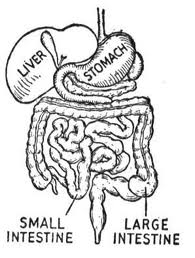
SV Ayurveda likens the stomach to aWHWYE-img1 ‘burner’ – imagine a burner as the one in your kitchen stove on which you cook everyday. In order to function and cook food placed on top of it, your burner needs fuel. Our stomach supplies such fuel (gastric acid, pepsin, digestive enzymes). In ayurveda, the fuel of this burner is called “pachak pitta.” How do you ignite this fuel? When your brain receives the signal that food is coming, it starts releasing pachak pitta in the stomach cavity which amounts to lowering the stomach pH so that the “cooking of the ingested food” can be initiated. This produces a flame/fire called “pachak agni” or “jathar agni” which is responsible for transforming the food that was ingested. This phase is called the gastric phase (or the stomach phase) that takes approximately 3-4 hours to complete! At this point in the stomach we have food, we have gastric and digestive juices (pachak pitta), a lowered pH (1-3), and automatic reflexes that churn the food breaking it down into smaller molecules and particles and this constitutes the pachak agni, the actual cooking activity.

SVA highlights that in order to support this highly sophisticated activity of eating and digesting food, of maintaining the proper balanced activity of Pachak Agni and Pachak Pitta in the burner, the gap, it is necessary to chew well, and helpful to eat in silence because chewing helps to break down the food by mixing it in with the digestive fluids found in the saliva, because unlike some other species, for humans, digestion begins in the oral cavity or the mouth. We secrete large amounts of saliva every day (1-1.5 litres/day). This saliva helps moisten the food and it contains digestive enzymes which aid in the chemical breakdown of complex molecules. The tongue helps form the food into a ball and pushes it to the back of the mouth and then down the esophagus where it is ready to be broken down by the stomach. Keeping silence helps to focus on the food. It gives the brain the opportunity to put undivided attention to govern all the activities in the mouth, the esophagus, the burner, or the digestive gaps. When the brain’s attention is not divided by other activities, then it can better determine how much flame needs to be given during the process of digestion. The brain then knows best what to do if there are problems arising due to either the food that was ingested (if it needs more breaking down if it is too rich in fat or protein) or if the digestion is slow because the individual is tired(not sleeping enough and working too much) or undergoing emotional stress etc. If digestion is slow due to heavy foods, it may also be due to the lack of proper spicing and cooking or the quality of the food or the quantity of the food, or the temperature of the food. This is where the concept of Ama comes in. The vedic shastras (ancient classical texts) say that no physical disease can happen without Ama hence one of the synonyms of disease is “amaya” (full of ama).

What are some ayurvedic digestive imbalances?
There can be 3 kinds of imbalances that the flame can have due to problems in the fuel or the burner. Click here to listen to Vaidya explain these.
For example,  if the fuel is less in quantity or the burner is clogged (different parts of the stomach are not functioning optimally) or both then the flame, the Agni (overall cooking process) will be low. This state is called Mandagni – or low Agni. In this case, when the food reaches the stomach without proper spicing that would correct that condition, then whatever portion of the food is not cooked properly will result in Ama. Proper spicing can help this situation very easily as different spices can help with different parts of the digestive process – some enhance the Pachak Pitta, others correct the Pachak Agni, others yet just clean the gaps on the burner to let the Pachak Pitta and Pachak Agni interact and do their job better in a cleaner environment! Modern nutraceutical science promotes high nutrient content diets across the board for all individuals. For example, brown rice. Brown rice contains more nutrients than white rice but then what happen when somebody has low Agni? When they eat heavier food that their stomach cannot fully properly digest, it will remain semi-digested, that is they will produce ama (semi-digested toxins) out of the nutrients in brown rice. In the case of Mandagni or the slow flame, SV Ayurveda gives specific recommendations for spices based on specific body types, age, climate, or season, and even ethnic background. Taking care of Mandagni or low agni situation through recommending spices is easier than other conditions Common helpful spices for Mandagni are: fresh ginger, sunthi(pitta-pacifying ginger), black pepper corns, long pepper (pippali), green thai chilies, ajwain seeds, cumin seeds.  But recommending these spices to all low Agni or Mandagni people would be dangerous in the situation where the person is either high Pitta by Prakriti (natal constitution), or if the Pitta is aggravated and accumulated in the stomach or the Sandhi (gap) or the burner is clogged, due to vibrational toxins (resulting from emotional or other non-material stress).  Unlike mainstream Ayurveda, SV Ayurveda identifies this condition called “High Pitta Low Agni” and has remedies to help balance it preventing further digestive and emotional aggravation. If an individual has high Pitta low Agni when the fuel is hot and the flame is low, then all the above spices will heat up the Pitta even more and create aggravation (desire to eat more but ability to digest less and less resulting in heaviness, fatigue, acidity, heartburn, emotional upset). In this situation, SVA recommends spices such as fennel, coriander to cook with. Clove is also very good for high Pitta and low Agni situations. but in very moderate doses. As far as turmeric, the king of spices goes, it has to be used in high Pitta low Agni with lots of coriander and fennel.
Connecting the mind and the stomach, that is keeping your attention on the eating process and not on TV or a conversation or reading a book is also recommended in Ayurveda. In ayurvedic terms, the mobility factor in the our bodies is call the Vata Dosha. The Vata Dosha helps to move things where they are meant to go. It supplies the air principle to our physiology. It has many subcategories. During digestion, it is important to keep Prana Vata (that runs the brain activity) and Samana vata (that keeps activity in the stomach going) balanced and coordinated, since the brain always commands the conversion and flow of the flame as modern science also recognizes. Hear more about the sub-doshas with Vaidya Mishra, click here

Tips for connecting Samana and Prana Vata :
when you eat, keep your spine straight to allow for the optimal flow of Prana Vata to the stomach area and also to give better room for Samana Vata to do its job. If you are having trouble with your circulatory vibrational channels, you can use Vaidya Mishra’s Supersport Transdermal cream on the spine or Supersport spray on the stomach (apply in clockwise motion) before food. 

Modern Science Confirms the Sutra-s

There are thousands of studies on turmeric and its health benefits including its preventative action for a wide range of fatal and chronic modern diseases, including: cancer, arthritis, diabetes,MSCTS-img1cardiovascular diseases, osteporosis, Alzheimer. Research shows that turmeric helps the body release cancer causing toxins, blocks estrogen receptors and enzymes that promote cancer and prevent the growth of new blood vessels.
 Turmeric is now recognized as one of the most powerful chemopreventive and anticancer agents. Anticancer drugs weaken the immune system, but curcumin actually enhances it! even acting as an immune restorer. Research at UCLA has concluded that turmeric is effective for the treatment and prevention of Alzheimer’s disease. Researchers have found that turmeric helps maintain healthy brain cellular metabolism, helps the the cells repair themselves and maintains the cell connection to each other. A wealth of data shows the anti-inflammatory, antioxidant, chemopreventive and anti-neoplastic (fighting cancer), antibacterial, antifungal, antiviral properties and capabilities of turmeric. The countless benefits of turmeric are so diverse that they affect virtually every organ.

Some pertinent research references:

  •          Churchill M. Chadburn A, Bilinski RT, Bertagnolli MM. Inhibition of intestinal tumors by curcumin is associated with changes in the intestinal immune cell profile. J Surg Res. 2000 Apr;89(2):169-75.
  •          Pal S, Bhattacharyya S, Choudhuri T, et al. Amelioration of immune cell number depletion and potentiation of depressed detoxification system of tumor-bearing mice by curcumin. Cancer Detect Prev. 2005;29(5):470-8.
  •          Perkins S, Verschoyle RD, Hill K, et al. Chemopreventive efficacy and pharmacokinetics of curcumin in the min/+ mouse, a model of familial adenomatous polyposis. Cancer Epidemiol Biomarkers Prev. 2002 Jun;11(6): 535-40.
  •         South EH, Exon JH, Hendrix K. Dietary curcumin enhances antibody responses in rats. Immunopharmacol Immunotoxicol. 1997 Feb;19(1):105-19
  •         Kim GY, Kim KH, Lee SH, et al. Curcumin inhibits immunostimulatory function of dendritic cells, MAPKs and translocation of NF-kappa B as potential targets. J Immunol. 2005 Jun 15;174(12):8116-24
  •          Bhattacharyya S, Mandal D, Saha B, et al. Curcumin prevents tumor-induced T cell apoptosis through Stat-5a-mediated Bcl-2 induction. J Biol Chem. 2007 Jun1;282(22):159-64.
  •          Thangapazham RL, Sharma A, Maheshwari RK. Multiple molecular targets in cancer chemoprevention by curcumin. AAPS J.
  •          Jagetia GC, Aggarwal BB. “Spicing up” of the immune system by curcumin. J Clin Immunol. 2007 Jan;27(1):19-35.
  •          Yang F, Lim GP, Begum AN, et al. Curcumin inhibits formation of amyloidbeta oligomers and fibrils, binds plaques, and reduces amyloid in vivo. J Biol Chem.2005;280:5892-901.
  •          Lim GP, Chu T, Yang F, Beech W, Frautschy SA, Cole GM. The curry spicecurcumin reduces oxidative damage andamyloid pathology in an Alzheimertransgenic mouse. J Neurosci. 2001;21:8370-7.
  •          Cole GM, Morihara T, Lim GP, Yang F, Begum A, Frautschy SA. NSAID and Antioxidant Prevention of Alzheimer’s Disease: Lessons from In Vitro and Animal Models. Ann N Y Acad Sci.2004;1035:68-84

The Magic of Turmeric Unveiled!

Turmeric has long been known as an auspicious spice in India. It has been used not only in cooking but also in spiritual and social rituals. The vedic shastras laud its benefits. So much so, that even a pinch of turmeric is considered enough! Click here to watch Vaidya talk about the top 20 benefits of turmeric. But should we just gowith what the shastras say or is there any scientific validation for this? Is it just an ancient indian myth or can it have meaning for us in our modern daily lives?
If you have not had the opportunity to check, you might want to google turmeric and scientific findings. The literature is recent, vast, and growing. Over the past few years, interest in turmeric has grown exponentially, hundreds of studies have been conducted not only confirming what the ancient vedic scriptures spoke of thousands of years ago, but also showing the potential this spice has for healing and preventing so many of our modern chronic and fatal diseases. So it’s good for you! But what does that mean? And how and why is it good for you? The scientific world will say that it contains specific chemicals (curcumin) that behave a certain way when ingested, and therefore heal. But there is a much bigger picture to things. Here is what Vaidya Mishra has to say about turmeric. His SVA explanation of turmeric is very distinct and as always particular to his lineage. You will not be able to read this anywhere else!

THE SVA PERSPECTIVE :
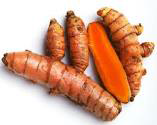
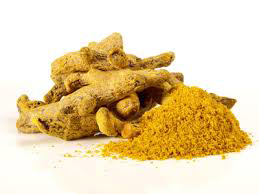
Vaidya explains that turmeric is highly pranic. We have learnt that Prana is itself made of three components, Soma, Agni and Marut. Turmeric is mostly made up of Marut and Agni. Because turmeric has more Marut and Agni, it is a very active ingredient that acts as a catalyst when ingested or applied transdermally. It does not sit idle. The healing and health-supporting effect of turmeric derives primarily from its characteristics of Agni and Marut. This is why detox is its primary property. In addition, it target a specific organ first and foremost: the liver. To define it in one sentence: turmeric detoxifies the liver. That is its primary target. Because it addresses the liver first, it also supports and helps the whole cellular system of the body – through its primary action on the liver it supports all the 5 Agni-s or metabolic factors that are seated in the liver. Each Bhutagni (or agni of the liver) corresponds to an element: space, air, fire, earth and water. The liver is primarily made of Agni and Marut but it also has some Soma. When the liver is intelligent (meaning it is able to perform its activities in the way it was meant to) and does not meet any hindrances for absorbing, processing and transforming Soma, then it can produce intelligent blood. When blood is intelligent (meaning it is not overloaded with toxins due to a weak liver, it carries all the information it is meant to, and is full of Prana due to a good satwic diet), then such blood supports the immune system and helps maintain the health of all the organs and organ systems in the body, maintaining as well the pH of the blood. This, in turn, reduces inflammation in the body overall. Inflammation can be the number one cause of many diseases. Turmeric is thus an alkalizing and therefore an anti-inflammatory. Its ability to support the liver in processing and transforming Soma results in alkalinity in the body. In scientific terms, researchers confirm that turmeric is an immuno-modulator, anti-inflam atory, it helps balance cholesterol, as a result it repairs DNA, is good for chemo-prevention, helps in senile dementia… and these are just a few of the findings… (see the column to your right for additional research references). Does this mean we should be ingesting large doses of turmeric? Nowadays curcumin capsules are prevalent in health food stores across the country, and countless people are swallowing a couple capsules a day. SVA explains that this can be highly detrimental to your health. In fact, if used improperly, turmeric can have unwanted negative results. So what is the proper use of turmeric then? Click here to watch Vaidya explain all about it.

HOW MUCH TURMERIC IS TOO MUCH?
In traditional ayurvedic medicine, it is not recommended that turmeric be used alone. It is also not recommended that turmeric be consumed raw. Why? As explained, the primary effect of turmeric is on the liver organ. Turmeric activates the TMOTU-img1liver and promotes its detox. turmeric brideWhen the liver starts to leach out toxins with the help of turmeric, and if the detox pathways found all over the body are not ready (they could be blocked, or incapable to handle a sudden toxic load efficiently) then this will affect the rest of the organs. Similarly, if the other organs such as the kidneys, or the urinary tract , or the colon, have not been prepped to handle the release of large toxic loads, then the toxic waste being released by the liver all at once without previous preparation will surely result in a “detox crisis.” It can rupture the circulatory channels while moving here and there, and worst of all, if it does not find its way out of the body safely and effectively, it will get reabsorbed which can result n auto-immune conditions. To use a simple analogy: a fast-forward detox with turmeric when you have never done any gentle detox protocols would be like trying to clean your house when you’ve not done it in years (5,10, 15 or more!). One fine morning you bring in this expert contractor, Turmeric Inc., who tells you have to start from the most important room in your house (your liver) that happens to be in the middle of the house (situated in terms of its role). So while you are discharging loads of junk and garbage from that room you have to be able to move and throw it all out, but all the pathways are filled with clutter, there’s barely any room to move or walk, so you start to put little little bags here and there in an effort to clean that first room, but you end up making the rest of the house even more cluttered, even more messy. What’s worse, you move things that had been sitting in their place and putrifying for a long long time, and naturally when you move them, you notice that there are strong chemi al reactions, toxic gases that are released but you are not able to open your windows and doors to bring in some fresh air as everything is backed up against walls… What a mess! So the first rule of thumb: 1) never consume turmeric raw. The second: 2) never eat it alone. After discovering turmeric for the first time and tasting its gentle bitter taste and reading about its health benefits, many people start to leave it on their tables along with the salt and pepper in a little shaker! When you visit Whole Foods market, you will in fact see next to their salad bar a little shaker with turmeric in it for those who are more health conscious! Someone should notify their management that it is a health risk…

A DELICIOUS AND SAFE SPICE MIXTURE:
SVA recommends that turmeric be cooked. If you are introducing turmeric to your diet for the first time, you must do so only in pinches.
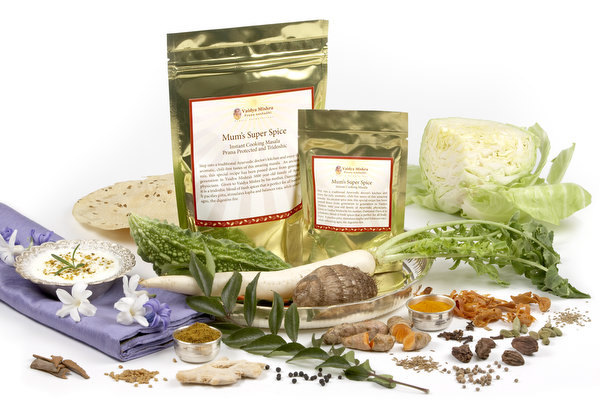
TMOTU-img2SVA also recommends that turmeric be cooked with other spices. Here is a safe and delicious spice recipe with turmeric. Combine 1 part turmeric powder with 1 part cumin, 6 parts coriander, and 6 parts fennel. The cumin, coriander and fennel seeds will be measured in seed form, then ground and then added to the turmeric powder. This recipe is not only delicious but it also has very specific effects. This is what the rest of the spices do.
Cumin helps to open the circulatory channels and restore their intelligence. Cumin has more Marut than Agni, it is not as pungent as chilies. It also knows what to absorb and what to eliminate. Coriander has the amazing quality of collecting and binding toxins from and in the blood and exiting them through the urinary tract.
Fennel is added to this mixture because the detox process initiated by the previous spices creates a little more cleansing activity in the body, and something is needed to overlook the cleansing operation to make sure everything is progressing on schedule. Fennel creates a friendly and cooling environment at the same time supporting the enzymatic processes to make sure detox happens safely and effectively.
Even though this recipe is balanced and balancing, if this is your first time introducing spices to your diet you must start using this mixture only in pinches. Add a pinch or two to your food while it is cooking. Increase a pinch every three days and go up to half a teaspoon and eventually up to a teaspoon. Do not sprinkle on your food for added flavor!
If you experience unwanted rash or nausea, or bloating and gas, reduce the dose until you feel comfortable again. Do not make tea out of this mixture, always only cook with it (protein, vegetables, lentils).
Put enough water in your vegetables or lentils so that the water becomes the medium for the transformative power of the spice. And then add a lipid medium as well, like ghee or olive oil, that way you can get both the lipid soluble and the water soluble factions of the spices. It is recommended that you cover your pot while cooking so as to preserve the aroma in the Soma.

TURMERIC AND SOCIAL RITES AND RITUALS:
Turmeric is considered a divine tuber. For any auspicious ritual celebration turmeric is used either as a powder or a paste. Clothes are dyed in turmeric. A mixture of turmeric and sandalwood paste is made to and applied on the body (face, limbs, etc) of brides and grooms before their wedding ceremony.

TMOTU-img3Only if death occurs, then turmeric should not be used. Why? When you grieving, mourning, your Sadhak Pitta is high. All the Pitta subdoshas (the metabolic principles of the physiology) are related to the liver and its 5 Agnis. If you ignite the fires in your liver, it will also increase the fires residing elsewhere in your body, and you don’t want to increase Sadhak Pitta when it is already high due to loss. In vedic India, when a person passes away, no turmeric is used during the 13 day vedic ritual. All close members dress in white as a sign of mourning, and avoid eating heating foods or agni-enhancing foods (turmeric, ginger, onion, garlic, or other spicy foods).
You need more Soma during periods of high grief or emotional turmoil, more Soma and more Ojas to connect your brain to your heart. Anything that consumes Soma is counter-indicated.

COUNTER-INDICATIONS:
Since turmeric ignites the five Agni-s of the liver Turmeric is also contraindicated in cases of high fever, chicken pox, small pox, active hemorrhoids, tuberculosis. if you are currently on any medication or are experiencing any serious health conditions, you must check with your medical doctor before perusing any turmeric or turmeric products.

Your Typical SVAntastic Day – or Lifestyle as Medicine!

YTSVD-img1Do you ever feel like you are not getting the most out of your day? Out of your body? Out of your own life?!!! Of course, there could be a myriad of reasons for experiencing lassitude in general! However, there is one thing you might want to try before you call your health expert to get to the bottom of things: how attuned are you with Nature?
In other terms, is your daily routine in-sync with Mother Nature’s daily cycles? The relationship between our biological bodies and the environment goes very deep as our bodies and the environment are mutually co-dependent. Nature needs us to care for her, just as she cares for us by supplying us with bountiful blessings. We give back to her when we take care of the gift of life and the miraculous bodies she has endowed us with.

Chose Right!
But sometimes things go wrong because we chose to ignore Nature’s prodddings…! Just because we can! While we can count on the early morning birds chirping outside our bedroom windows, others may be able to count on us to be just as fresh and full of life in the early morning  because we might have chosen to work or party through the night. We might have decided to keep on going ignoring our bodies telling us to rest, that exhaustion had set in and it was time to recoup. Instead we had reached out for yet another cup of coffee to pump our body body chemistry and get second wind! Another expample of being out of sync with Nature’s rhythms: our stomachs tell us that the Chinese dish served in the restaurant next door is not really sitting well and causing quite a few physical and even emotional upsets, but the taste of that soy sauce on the deep fried spring rolls is just too irresistible to our palate…
YTSVD-img2These are small signals that Mother Nature communicates to us through our own bodies. And modern science itself is on to them.
What Science is Saying:
In the 1950s, the term “circadian” was coined to refer to our bodies’ attunement with the cycles of nature. The word “circadian” comes from “circa” = about and “diem” = day, so it is a daily cycle.
In nature, there are large (macro) and small (micro) cycles, that is, some that take a really long time, and others that happen much faster. The circadian cycle is all about what happens to our bodies in one day in terms of metabolism, hormonal balance, etc. It defines the relationship between our bodies and the environment, explaining how and why specific functions and results can be optimal at specific times of the day and not at other times.So we can understand that working through the night on high caffeine is not necessarily a good idea even though we can do so, because our bodies are prone to optimal activity on the physical, mental, emotional, spiritual levels, when specific conditions and situations are satisfied.
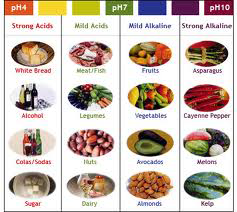
But so what if we are a little tired the next day, we can catch up! So what if we get heartburn continuously, we can get some anti-acid tablets etc… Because both science and ancient ayurvedic wisdom confirm that this is what amounts to aging. And aging can be an experssion of an overworked body that has never really gotten the opportunity to recover from constant work; or it can be the expression of mental and emotional exhaustion where an individual simply breaks down even when faced with the minutest of daily happenings. Over time, the cumulative effect of delayed bedtime, of acidic food residues, of non-processed emotional stress work their way into the physiology creating a slump in our personality and outlooks! When this happens, no medicine, no herb, no strong will-power can do anything! There is a biological and chemical reality that has set in that needs to be altered through the original cause. And this is where “lifestyle medicine” becomes so signficant.
YTSVD-img3For example, in Vaidya Mishra’s Prana Center, many clients have come in complaining of mental fog, overall fatigue, lack of appetite, lack of spirit. Much to their surprise, their recommendation has been to do one thing only: re-schedule their lives to be back on track with the rhythms of Mother Nature. Even modern science is on this! See the diagram below:
Things as simple as correcting the sleeping/waking routines, our eating times and frequency, etc. have much to do with our output and thus pre-determine the success of our actions and the happiness of our lives! In Ayurveda, the importance of being in-sync with Nature’s cycles has always been known. In fact, the discussion of this very important subject is very detailed and interesting, because the understanding of the human physiology and its relationship to Mother Nature is much more in-depth and layered.

The SVA Perspective
More specifically, in Vaidya Mishra’s SVA tradition, we find many unexpected details to help reset our internal metabolic and other clocks, so as to stay on the right path of bliss and balance.
The Charak Samhita explains that there are 3 Upasthambas, or subpillars, of life: Ahar, Nidra, and Brahmacharya. What do these 3 support? They support the reception and flow of Prana. Because, as Vaidya explains, life is defined as the flow of Prana. So health and happiness, in a nutshell, depend on the proper reception and flow of Prana. Then supplying Prana to every organ and system and molecule is the ultimate healthy thing to do. Click here to hear more about the 3 sub-pillars of life with Vaidya Mishra on youtube. The discussion of these sub-pillars of life shows us the value of “lifestyle as medicine” in Ayurveda. We talk a lot about “food as medicine” but lifestyle plays an even greater role as a preventative modality. All the shastras of Ayurveda talk about the importance of balance between rest and activity, about morning routine, daytime routine, night routine, what are good activities to maintain, what would be bad and not recommended activities. In Ayurveda that section is called “Swastha Vritha.” In SVA, the primary recommendations are based on Swastha Vritha, because we believe that unless daily routine and dietary protocols are proper, no herbs or medicine can help correct an imbalance! Although in this day and age, given the rhythm of our daily lives, it is not easy to follow the right lifestyle 100%, sowing the seed of knowledge and its value always give the desire to follow and wherever deep desire is, there Mother Nature supplies the means to follow…

Why to Follow Swastha Vritha? The SVA Perspective:
We know by now that the components of Prana are Soma, Agni, and Marut. Prana is found in the environment, in Nature, and enters our bodies. The environment and our bodies are connected through the flow of Prana and the ratio of Soma, Agni, and Marut in the environment changes on a daily basis as well as a seasonal basis. It also gets influenced by the planets and their orbits, their vicinity to earth. There are thus many varying factors that are constantly changing and affecting the body on a daily basis. That is why it is even more important to try to follow as much as possible, on a daily basis or seasonal basis, all the proper dietary and lifestyle guideline routine so as to keep the body grounded despite all the ongoing changes, since so many activities in the body are of a repetitive nature and thus need constant continuous repetitive feedback as well from us – we cannot survive long without eating, drinking, resting, etc. We have to go through these activities on a daily basis to maintain life…
There are even distinct terms for the different times of day that require specific routines. For example, the daytime routine is referred to as “Dinacharya” while the specific routine for the nighttime is called “Ratricharya.” The lifestyle medicine of Ayurveda is all about teaching us to cope up with the daytime environmental and other changes that affect our behavior and aptitudes; and the nighttime routine is about helping us adjust to the environmental changes at night so that the reception and flow and delivery of Prana are not interrupted in our physiologies.

Samadosha, Samagni and Samadhatu:
If we were to summarize everything that comes under topic, we would say that it is all about maintaining Samadosha, Samagni and Samadhatu. Because, as we have seen, Soma, Agni, and Marut are the raw material for Kapha, Pitta, and Vata, and these doshas, in their turn, govern all the Agni-s (metabolic principles). This is all it takes to maintain perfect health: Samadosha – that all the doshas are maintained in perfect equilibrium so that the body has the opportunity to run all its organs and organ systems optimally; Samagni – making sure that all that is ingested is properly transformed into the next stage, so that energy is gained, and the body is not carrying a load of unprocessed materials that are slowing it down; Samadhatu – so that when the body is functioning perfectly then it renews all its tissues and systems on the physical level, and then the subtler connections that pervade the consciousness are able to thrive supplying more bliss to the mind and heart…

Prebiotics & Probiotics for Your Skin – The In-Depth SVA Perspective by Vaidya RK Mishra and Dr M. Teitelbaum

If our body creates its own friendly bacteria, why do we need to use synbiotic (prebiotic and probiotic) foods, supplements and skincare? It’s simple; we are depleting our own friendly bacteria through the use of antibiotics, environmental toxins, poor diet, parabens (yes, we have all heard that dirty word!) preservatives, highly acidic food, acidic personal care products, excess alcohol intake, too many anti-bacterial solutions in skin products, chemical peels and more. The overuse of antibiotics is of particular concern as antibiotics not only kill germs and disease, they also kill beneficial bacteria. Simply put, antibiotics kill without prejudice. Over time, these etiological factors have altered our friendly bacteria so much that we have depleted our immune system and we are more susceptible to disease and illness. As discussed earlier, the use of probiotics as a complement to a healthy diet and lifestyle is not new, and has been documented in the Vedas and used for thousands of years for digestive, gastro-intestinal, urogenital, auto-immune and skin ailments. Up until recently, probiotics have always been ingested internally, but are now available as topical solutions that directly improve the composition of the skin’s microflora and friendly bacteria. A growing body of scientific evidence and research is showing that in addition to certain foods and supplements, topical creams, ointments and clays containing certain live and friendly bacteria can alleviate and prevent a variety of skin conditions and symptoms. (see list of sample references at the end of this article). Our skin, our largest organ, is full of little ecosystems that need to be balanced in order to function optimally. Through its layers we absorb the universal pranic energy we need to sustain our life, as well as protect us from hazardous effects of environmental toxins such as chemicals, EMF and EMR (electromagnetic fields and radiation). Our skin also supports our immune system helping to prevent infections. By supporting our skin with prebiotics and probiotics we can reestablish a state of balance and optimize the naturally occurring friendly bacteria in our bodies. Remember, our food is our medicine and our skin is an organ, so feeding our skin adequately with nature-derived nourishment will help restore its balance, luster and vibrancy. Low levels of friendly bacteria in our skin shows up as symptoms of dry and rough skin, thinning and scaly skin, lack of resistance against environmental and seasonal changes and allergies, and flare-ups related to auto-immune conditions. Common bothersome and often painful (both physically and mentally) skin conditions include; eczema, acne, psoriasis, rosacea, allergies, dermatitis, rashes etc.   The symbiotic approach of using prebiotics and probiotics in skincare is a straightforward one; reduce the amount of bad bacteria, while preserving and supporting the beneficial bacteria that protect our skin from infections and other environmental effects. But it should be noted that for optimal results, the application of synbiotics on the skin should be a coordinated one as bacterial equilibrium on the skin can be easily disturbed. The topical application of prebiotics will promote the growth of beneficial bacterial and inhibit harmful bacteria. The topical application of probiotics provides a preventative and alleviating effect of skin issues. Together, they provide a balanced approach that improves the function of the skin and supports the overall immune system. The skin acts as a barrier against harsh chemical and vibrational environmental effects that we sometimes cannot avoid and therefore requires our long-term care and attention.

What are the key differences between conventional antibacterial skincare products and synbiotic skincare products?
  Conventional anti-bacterial skincare products reduce all bacterial growth, good and bad. Synbiotic skincare products fight and limit the growth of infectious bad bacteria, yet preserve and stimulate beneficial and friendly bacteria. Probiotics also aid the skin in absorbing nutrients, sooth inflammation, and boost immune function.
When evaluating your use of synbiotic, prebiotic and probiotic skincare, it is important that you research the validity of the products and educate yourself sufficiently. It is also key to understand that true health is not simply about treating symptoms – it is about considering the mind, body and soul as a whole entity.
The Charak Samhita[1] teaches us that Ayurvedic healing should have a three-pronged or tri-sutra approach; we should understand the etiological factors of those we are healing (hetu sutra), we should analyze the symptoms (lingam sutra), and third, we should use therapeutics (aushadhi gyanam sutra) to prevent and heal. Etiological factors are risks factors that contribute to the cause of a disease and those specifically related to our skin may include; the use of antibiotics, unnatural preservatives, acidic food, intake of high sulphur foods, excessive alcohol, chemical-based personal care items, makeup and sunscreens. The etiological factors will cause symptoms that manifest as dryness, roughness, premature wrinkles, lack of resistance to environment fluctuations, lack of glow, flare-ups related to auto-immune deficiencies, as well as thinning and scaling. Therapeutics should be offered as guidelines in avoiding etiological factors, using safe cleansing agents for our skin, and supplementing our skin with pr biotics (discussed below) and probiotics to support the friendly bacteria.

Vaidya’s SVA Probiotic Line
Vaidya Mishra has developed the SVA pre-and-probiotic facial cleansers, clays, creams and soaps to target common skin ailments, provide anti-aging benefits, and support an environment for healthy and friendly bacteria to thrive. The proprietary formulations are based on ancient Vedic texts, time-tested research studies and practice by the SVA Ayurvedic lineage, as well as basic universal truths and philosophical concepts.  This skincare line is designed to be used as part of the tri-sutra Ayurvedic approach; avoid as many etiological factors as possible to help support the friendly bacteria on your skin, and treat the symptoms and skin with therapeutics such as the SVA prebiotic and probiotic skincare line. The prebiotic herbs used in the SVA skincare line are bacteriostatic, as they stop bacteria from reproducing without harming them. They provide a healthy environment of food for friendly bacteria to thrive, and keep the PH level of the skin neutral. Since the bad bacteria are not welcome, they leave or simply do not multiply. The SVA skincare line does not use bacteriocidal substances, which are designed to kill bacteria. Examples of bacteriocidal formulations are disinfectants, antiseptics, and antibiotics. Prebiotic herbs in the SVA line provide a wonderful environment for the yoginies to flourish and include:

  • turmeric – immune modulator and bacteriostatic (in body prebiotic clay only)
  • neem leaf – supports cellular immunity (in body prebiotic clay only)
  • ashoka – binds auto-immune toxins (in body prebiotic clay only)
  • lodra – firms and reshapes skin (in body prebiotic clay only)
  • triphala – nurturing and helps bind toxins (in body prebiotic clay only)
  • iron bhasma – provides extra food and supports immune system (in body prebiotic clay only)
  • praval pishti – coral calcium (in body prebiotic clay only)
  • baking powder – alkalizing and cleansing effect (in body prebiotic clay only)
  • marshmallow root – contains inulin an adaptable substance that helps bind toxins
  • slippery elm – similar effects as marshmallow root
  • Indian sarsaparilla – fat purifier (fat is acidic which can kill friendly bacteria)
  • praval bhasma – neutralizes PH balance
  • pranic clay – for enhanced delivery of life-enforcing pranic energy
  • Sweet orange and grapefruit – gentle natural preservatives
  • manjistha – immune corrector
  • vegetable glycerin – emulsifier
  • ylang ylang, jasmine, lavender – fragrances

The probiotic creams in the SVA line include an organic base of coconut and vegetable glycerin, ylang ylang, jasmine, sweet orange and grapefruit as natural preservatives, neem, turmeric, manjistha, indian sarsaparilla, guduchi, aloe vera, and lactobacillus bulgaricus as the active probiotic ingredient.
The SVA pre and probiotic products should be used together and provide a safe and effective two-step solution for detoxification and restoring balance to the skin and include:

–        Step 1 for face: Prebiotic facial cleanser

  • Clean your face with a thin layer of prebiotic cleanser
  • Leave it on for 2-3 minutes, then rinse off
  • Should be kept in a cool and dry place

–        Step 2 for face: Probiotic facial cream

  • Apply a thin layer of probiotic facial cream
  • Keep in the fridge and finish within one month of opening
  • If aroma disappears or goes off, discard the cream

–        Step 1 for body: Prebiotic cream clay

  • Apply a thin layer of clay on your body
  • Leave it on for 5 minutes, then rinse off
  • Should be kept in a cool and dry place

–        Step 2 for body: Probiotic body cream

  • Apply a thin layer of probiotic body cream
  • Keep in the fridge and finish within one month of opening
  • If aroma disappears or goes off, discard the cream

In addition, Dr. Mishra has developed a line of synbiotic soaps with prebiotic and probiotic ingredients that are extra-strength and should only be used by licensed Ayurvedic practitioners and physicians. This soap is designed for affected areas of the body only and should not be used on the face. Afterwards, one should apply probiotic cream on the body. A lesser-strength soap is available for daily use. After following the two-step SVA pre and probiotic application, users have reported that their skin felt instantly nourished, hydrated and provided them with an overall feeling of bliss.
Based on divine guidance, the wisdom and knowledge of ancient Vedic texts, and the Shaka Vansya (SVA) Ayurvedic lineage, Vaidya Mishra and his team have been able to capture the essence of a revolutionary skincare formula that balances and strengthens the immune system, and protects, enhances and enriches the skin.

References and further reading on probiotic studies:
There are now hundreds of studies that show the direct connection and relationship between probiotics, the skin, and immunity. Below are a few references:

  • Coordinated application of pre and probiotics to get optimum results on skin.[2]
  • Conventional cosmetic strategies use antibacterial methods which reduce the amount of bad bacteria, but also effect beneficial bacteria. A prebiotic strategy would rebalance the composition of the skin’s microflora by inhibiting the growth of P. acnes and at the same time preserving the growth of beneficial bacteria.[3][4][5]
  • Probiotics may alleviate and even prevent eczema in infants.[6]
  • Significant improvement in atopic dermatitis has been reported in infants given probiotic-supplemented elimination diets.[7]
  • Probiotics administered pre-and post natal for 6 months may be able to reduce the prevalence of atopic eczema in children at high risk for atopic diseases as compared with placebo treatment.[8]
  • Double-blind, randomized clinical study has shown that as 24-week skin nutrition intervention with a fermented dairy product in female volunteers having dry and sensitive, but otherwise healthy skin significantly reduced trans-epidermal water loss and thus improved stratum corneum barrier function compared to a placebo product.[9]

[1] The Charaka Samhitā Sutra is the canonical and authoritative early Ayurvedic text on internal medicine
[2] Journal of Dermatological science. Leyden JJ, McGinley KJ, Bowels B. Propionibacterium acnes colonization in acne and nonacne. Dermatology 1998; 196:55-8.
[3] Journal of Dermatological Science. Pre-and probiotics for human skin by Jean Krutmann.
[4] Bockmuhl D, Jasoy C, Nieveler S, Scholtyseek R., Wadle A, Waldmann-Laue M. Prebiotic cosmetics: an alternative to antibacterial products. IFSSC Mag 2006; 9-1-5
[5] Freter R. Factors affecting the mircoecology of the gut. In: Fuller R, ed. Probiotics, the scientific basis. London: Champan & Hall, 1992: 111-44.
[6] Food allergy, anaphylaxix, dermatology and drug allergy. Probiotics in prevention of IgE-associated eczema: A double-blind, randomized, placebo-controlled trial. By Thomas R. Abrahamson, MD., Ted Jakobsoon, PhD, Bengt Bjorksten, MD, PhD, and Goran Oldaeus, Md, PhD (Linkoping, Stockholm, and Jonkopimg, Sweden
[7] Isolauri E., Arvola T, Sutas Y, Moilanen E, Salminen S. Probiotics in the management of atopic eczema. Clin Exp Allergy 2000; 30:1605-10, Rosenfeldt V, Benfeldt E, Dam Nielsen S, Fleichsler Michaelsen K, Jppesen DL, Valerius NH, et al. Effect of probiotic Lactobacillus strains in children with atopic eczema. J Allergy Clin Immunol 2003; 111:389-95., Viljnen M., Savilahti E, Haahtela. Et al. Probiotics in the treatment of atopic eczema/dermatitis syndromein infants: a double-blind placebo-controlled trial. Allergy 2005; 60:494-500, Weston S., Halbert A, Rihmond P, Prescott SL. Effects of prebiotics on atopic dermatitis: a randomized controlled trial. Arch Dis Child 2005: 90:892-7.
[8] Kalliomaki M, Salminen S, Arviommi H, Kero P, Kaskinen P, Isolauri E. Probiotics in primary prevention of atopic disease: a randomized placebo-controlled trial. Lancet 2001; 357:1076-9.
[9] Puch F, Samson-Villeger S, Guyonnet D, Blachon JL, Rawlings AV, Lassel T. The consumption of functional fermented milk containing borage oil, green tea and vitamin E enhances skin barrier funtion. Exp Dermatol 2008; 7:668-74.

You Asked:

Lori M. from Sacramento asked: “I am really enjoying your newsletter, and I must say, I never considered the possibility that skin may also need probiotics! This is really exciting news, and thank you for writing about this. My question: I have often wondered if some of my chronic health problems might be due to the way I treat my skin. One thing I love is a very long, hot shower, or a bath which gets very steamy. But I think perhaps I strip my skin, while I’m singing in the shower??? Do I have to give up my favorite showers, or is there a way to protect my skin while I am getting a long, hot soak?”

Dear Lori: thank you for your question. Yes. Long hot showers are not good for the yoginis of the skin – regardless of body types (Vata, Pitta, Kapha) or season. In addition, that is why in the SVA lineage, after every long “swedana” (herbal steaming) there is a special exfoliation program which includes a mixture of chickpea flour and yogurt that is applied to the skin to replete the friendly bacteria. For you situation, try to cut down on the temperature of your showers, and try not to be in the hot water for longer than 6-7 minutes. Then, once a week, do a full body treatment with the Pre- and Pro-biotic cleanser and creams for the body every week. Also use the Probiotic cream for the face every day to replenish the yogini-s.
In the big picture, however, you may also want to see why you feel the need to have these long hot soaks/showers. It may be that your overall circulation is slow, your body needs more thermogenesis and you are intuitively seeking that through hot showers and soaks. There are many ways of turning things on internally through ayurveda. And you may find that once you do improve overall circulation and your body’s thermogenesis, your need for hot showers/soaks may diminish or disappear. We would recommend a session with a SVA practitioner to determine things further. Hope this helps.

Anne O. from Seattle asked: “Hello Prana Center:  I have just seen the newsletter today and am excited to see the new probiotic skin care products you are offering.  I have had a rash on both underarms area for 2 years now.   I keep hoping it will eventually go away but it never does!   It can be itchy at night, and also after eating pitta-provoking foods – spicy foods in particular.

It seemed to have started after using tea tree oil in that area, which (I am speculating) may have killed off all the good flora.

So my question is, would you recommend the pre/probiotic clay and cream for this type of problem.
Thank you.   Your products and newsletters are a joy to my life.”

Dear Anne: Thank you for your feedback, we appreciate it.
Your rash may be related to the use of Tea-tree oil. I have seen in my practice, and some researh ahs been conducted that indicate that Tea-tree oil can in fact cause such rashes. But you may also have some amavisha (reactive toxins)  in your fat tissue stored there or that are being released through that area. So: yes, you can try to use the pre- and pro-biotic cleanser and creams. You may also alternate applying Surya Maha Shanti cream one day and Pro-biotic cream on the next. Do this for a couple of weeks and see how you feel. In the big picture, you may also need to consult with a SVA practitioner who would check the “hetu” (etiological trigger factor) of your condition.
MVM from Northern California asked: “I was chronically constipated all my life, until the past few years practicing SVAyurveda. So, I now consider it a big success that I have a daily bowel movement. But the BM does not happen right when I awake. It usually occurs after drinking a cup of tea (1 clove, 1/2tsp coriander, 1/2tsp fennel, 3 mint leaves), which I have after I get up. I dream of the day when I will have a BM upon awaking, but in the meantime, is there anything one can do to encourage a BM immediately upon arising, besides of course, a sattvic diet and lifestyle?”

Having a first-thing-in-the-morning BM is also a learnt process, that is: your body learns that that is what you want it to do at that time, so you may want to train it by spending a minute or so giving it a chance to happen first thing in the morning. When you do so, calm your mind and do not think about anything else, as we know the mind and the gut are closely connected. In general, however, delay of BM first thing in the morning is usually due to the channels not being fully open and energy flowing. That is why your channel-opening tea recipe (with clove and mint, etc) is helping you. With time, as you refine your diet and train your physiology, you will find that it will happen…  The science behind this is the connection behind Prana and Apana through the Sushumna Nadi by enhancing the reception of Prana from the environment. Apply the Mahamarma Oil on your Adipathi Marma and Supersport or Mahakanchenar Transdermal creams on your lower spine. On a final note: make sure you avoid reading material or listening to news or any such distracting mental activities while attempting to have a BM!

Benoit G. from Canada: “Hi everybody !
You should add a “Recipe” page to your website; and also, a recipe book ! Learned in your last newsletter about “Mum’s ghee”; but how do we make it ???
Best regards,
Namaste, Benoit”

Dear Benoit: thank you for your suggestions. We will add a recipe section to our website. Vaidya’s Recipe book is in its final editing stages and should be out very soon. We will keep all informed. Making Mum’s ghee is a long process (first start with raw cream and make yogurt, churn the yogurt to make butter, cook the butter to make ghee). We have discussed this elsewhere and we also have a brochure on www.chandika.com that discusses it (look up Mum’s Ghee). We may make a video available in the future. But in the meantime, we like to make things easier by making Mum’s Ghee available for sale through www.chandika.com.

Jim P. from Santa Barbara wrote:  “It has been so good reading the newsletters. I have been soaking up the knowledge. Especially the knowledge in the recipes.”

Thank you for your feedback dear Jim.

Linda from Argentina asked:
“Dear Malavika,
You are mentioning in your recipe on youtube “yoghurt starter” – there is some special kind you use? could i use my probiotic capsules instead and empty them in the coconut milk – i am in argentina and dont know where to get youghurt starter as mentioned…
Also i am not clear on why its not good to consume the probiotics in capsules in large cuantities. I read the newsletter from today completely but still not understanding this point…
thank you
Linda”

Dear Linda: thank you for your question. The yogurt starter that I use is from a company called “Natren: Probiotic Yogurt Starter,” it containsLactobacillus bulgaricus and Streptococcus thermophilus bacteria (plus Nonfat milk solids and whey as carriers). You can order this brand through the Prana Center (1.818.709.1005) or directly from Natren (1.800.992.3323).  Depending on what is in your capsule of probiotic, it may or may not be a good idea to use. Check the ingredients. In Argentina, see if you can find a yogurt starter with similar minimal ingredients and additives. As to your final question: it is an excellent question. A very quick answer would be given by Vaidya Mishra in the following manner: Probiotic bacteria are living organisms that need a specific environment and temperature to grow and thrive. You know this from making yogurt for example. If your milk is too hot they die and the milk does not turn into yogurt. Similarly if your milk is too cold they cannot be activated and thrive. In the same manner, when you ingest probiotic bacteria they have to be able to survive in your physiology, to safely bypass the low pH of your stomach (normally so for everybody) and end up in your gut so they can thrive. If your body’s overall pH is too low, and if you don’t protect these bacteria by ingesting them with a Soma-genic medium, then they will die in your body and create gas, and other problems. That is why SVA does NOT recommend just swallowing the capsules on their own. I hope this clarifies your question. Let me know. Thanks.

Mary from Northern California asked:
“Thank you for another wonderful newsletter. I am very grateful to have the rest of a SVAntastic day outlined for me. I tried the upma recipe and am delighted to have a savory breakfast alternative. However, as a high pitta, I found 1/8 tsp of fenugreek made me feel like a volcano with the hot lava roiling around in my chest for a few hours. Are there any spices that a high pitta could substitute for fenugreek?
Also, I wonder if exercise is part of a SVAntastic Day, and if so, when is the best time for exercising?
Thank you,
Mary”

Dear Mary: Thank you for your feedback, we appreciate it. And we definitely want to avoid aggravating the pittas out there! So: if you find fenugreek too heating for you, you may substitute it with cumin seeds. They will flavor up your quinoa upma and help with digestion without overheating your system. As for exercise: SVA recommends gentle yoga, however, exercise is definitely an option if/when you prefer it. It is best done during the Kapha times of each day when you have more Soma available in the environment, thus either between 6-9am or 6-9pm. If you do it in the evenings, unless you have a really sturdy somagenic built, it is best not to be too vigorous otherwise it may affect your sleep. Hope these answers help!

MVM from Northern California asked: “I was chronically constipated all my life, until the past few years practicing SVAyurveda. So, I now consider it a big success that I have a daily bowel movement. But the BM does not happen right when I awake. It usually occurs after drinking a cup of tea (1 clove, 1/2tsp coriander, 1/2tsp fennel, 3 mint leaves), which I have after I get up. I dream of the day when I will have a BM upon awaking, but in the meantime, is there anything one can do to encourage a BM immediately upon arising, besides of course, a sattvic diet and lifestyle?”

Having a first-thing-in-the-morning BM is also a learnt process, that is: your body learns that that is what you want it to do at that time, so you may want to train it by spending a minute or so giving it a chance to happen first thing in the morning. When you do so, calm your mind and do not think about anything else, as we know the mind and the gut are closely connected. In general, however, delay of BM first thing in the morning is usually due to the channels not being fully open and energy flowing. That is why your channel-opening tea recipe (with clove and mint, etc) is helping you. With time, as you refine your diet and train your physiology, you will find that it will happen… On a final note: make sure you avoid reading material or listening to news or any such distracting mental activities while attempting to have a BM!