Are Triphala and Prakrit Necessary?

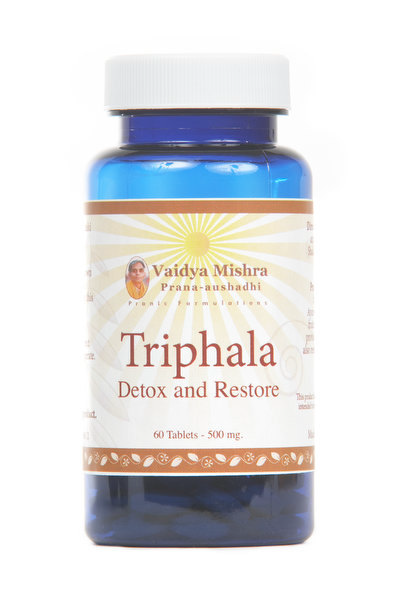
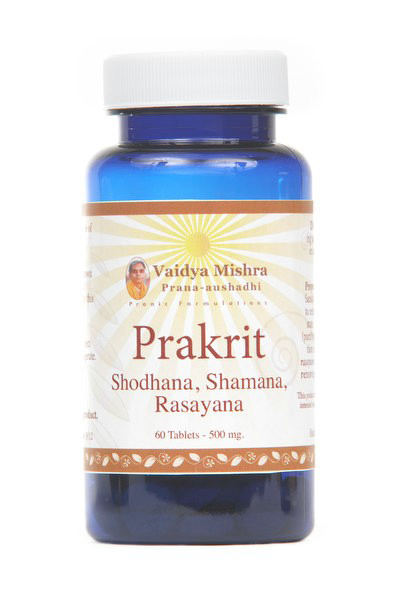
ATAPN-img1“Dear Vaidya, hope you are doing good. Thank you for all the good information, I would like to ask a question about Triphala if I may. I follow a diet of grains, vegetables, and paneer, which I make with lime; I eat yogurt at my lunch meal for which I also follow your directions and add water to it. I also eat a lot of fruit through out my day and my drink of choice is warm water. I have been taking Triphala 2 times a day and at night I add Prakrit. My question is with this kind of diet why do my bowels not work with out the use of these things?
Thank you, Respectfully – Jim K., Bethlehem,
Pa.”

“Dear Jim: The Charak Samhita explains that there are 3 types of innate bowel tendencies in an individual:
  1. ATAPN-img2Krur kosthi tendency which means an individual is by birth prone to constipation regardless of what kind of diet they keep;
  2. Madhya kosthi which is a bowel tendency that is neither loose nor constipated;
  3. Mridhu kosthi – bowels that tend to be always on the soft loose side. Everybody is born with one of these kosti prakriti-s or innate natural bowel tendencies. It seems that you belong to the first group, that you are “krur kosthi,” that is why you need to support your physiology by taking the supplements. But remember, both the Triphala as well as the Prakrit tablets are derived from fruits, so you are in fact just adding more fruits to your diet. Fruits that do not have any side effects. These fruits have a short and immediate as well as long term benefits.
    In the short term, you are supporting your bowel movement to be regular and optimal; but in the long term, these fruit tablets act as a “rasayana.” Rasayana means: that which can slow down aging, or give optimal graceful aging, as well as support your immune system. The fruits that Triphala – literally formed by the words “tri” for three and “phala” for fruit – is made up of, as well as the fruit that Prakrit is made up of are renowned for their health supporting properties and are helping connect your colon to your mind, so that your bowel movement occurs daily and regularly. Plus they create a very good environment for friendly bacteria to thrive in. And you know that a gut populated by friendly bacteria is the key to optimal health as they facilitate not only elimination but absorption of nutrients as well.
    Having at least one good daily bowel movement through which one evacuates toxins from the physiology on a daily basis can be the ultimate secret for a long and healthy life…


New Arrival: Sweet Orange and Mango Chutney

Is it possible to have a sweet fruit spread that’s delectably perfect to balance your pitta and vata doshas without aggravating kapha? With Vaidya’s Sweet Orange and Mango Chutney that’s exactly what you get – this new chutney is not just free from chemical and toxic additives, colors, and flavors, but it is formulated according to the most ancient ayurvedic principles that help balance the body and the mind through a healthy treat. It’s a delicious chutney that is great to use daily with your meals or eat alone at snack-time with some crackers! 
downloadAccording to the basic principles of ayurvedic pharmacology – known as dravyaguna, the natural taste of a food item is very important because it gives you information about what it is going to do in your body, what actions it is going to perform once you ingest it. This is why, in Ayurveda, food is first and foremost categorized and evaluated according to their taste. In total, Ayurveda says there are 6 tastes: madhur (sweet); amla (sour); lavan (salty); katu (pungent); tikt (bitter); kashai (astringent). 

trans o

The first three tastes are known to be vata pacifying (the sutra says:

tatrādyā māruta ghnanti trayastiktādaya kapham|
kaāyatiktamadhurā pittamanye tu kurvate||171||

the first 3 tastes pacify marut/vata or the air principle). The Sweet Orange and Mango chutney contains a balance of both the sweet (madhur) and sour (amla) tastes, therefore, it pacifies all vata aspects right away – body and mind. But does this not aggravate kapha dosha – since only the bitter, pungent, and astringent tastes pacify kapha?

Vaidya’s chutney is made of raw sweet mangos that are known to be astringent, and in this recipe, the astringent taste or “kashai rasa” counter-balances the sweet and sour properties of the chutney keeping kapha in balance.
This chutney is also pitta pacifying as the sutra says: “kashai tikt madhura, pitta manyecho kurvate”- astringent, bitter and sweet tastes all pacify pitta. The chutney contains the astringent (kashai) and the sweet (madhura) tastes that pacify pitta.
So, in a way, we can say that this chutney is almost tridoshic when kapha individuals consume it with enough spices and in moderation!
But beyond doshas, this fruit spread is very balanced because it not only contains premium ingredients but these ingredients have been meticulously put together to bind each other out, so for example, the natural pectin binds the micromolecules of the raw organic sugar so the sugar does not go into the system in a fast-forward fashion but rather at a sustained-release pace, so when you consume it you do not get a sugar high and come back for more after you’ve crashed from your high. With the sustained release of sugar, you satisfy your craving and walk away happy with a small amount! The sugar is also balanced by the ascorbic acid and all the other ingredients.
Plus, Vaidya’s chutney is naturally preserved with no hidden sodium or potassium benzoate, no synthetic flavors or colors or aromas. Only nature’s goodness of the most delicious mangoes and sweet oranges in a jar…

Warm up with a cup of tea!

In the Fall, temperatures drop, a dry wind replaces the gentle summer wafts and the days get darker and colder as the earth travels away from its source of Agni, or the sun. Our body responds to the autumnal weather by shrinking down circulatory channels – shrotas. The shrotas, physical channels inWUWACOT-img1 the body, are given immense importance in Shakha Vansya Ayurveda; the Ayurvedic texts say it clear and loud: shroto mayo purusha, “The whole body is nothing but shrotas.” But what are these shrotas for anyways?

The shrotas circulate and deliver nourishment; heat;  energy; they carry the dhatu-s or tissues; evacuate toxins; and so much more. Only when the channels are open, and free from acidic toxins, can health be optimal. Only when the channels are open and balanced can nourishment reach deep into the body and can toxins be removed completely from the body. Support your body by clearing your channels, keeping them warm, and clear and free from seasonal accumulation.

In the SVA lineage, we are very careful to maintain the intelligence in the shrotas which helps determine what to eliminate; how much to eliminate; when to eliminate; what toWUWACOT-img2 absorb; how much to absorb; where to deliver things to; when to deliver; how much to deliver.

In the Fall, Vata naturally increases. To keep your physiology in balance, try to have lighter nourishing but timely meals; maintain a regular yogic exercise routine; stick to an early rather than late bedtime; do regular self-massage with a good Vata pacifying oil; have some uplifting down-time activities to un-stress from work.

In addition, an easy daily way to keep things running smoothly and efficiently can be achieved with just a cup of tea! Vaidya Mishra has formulated many balancing teas that help in different ways.

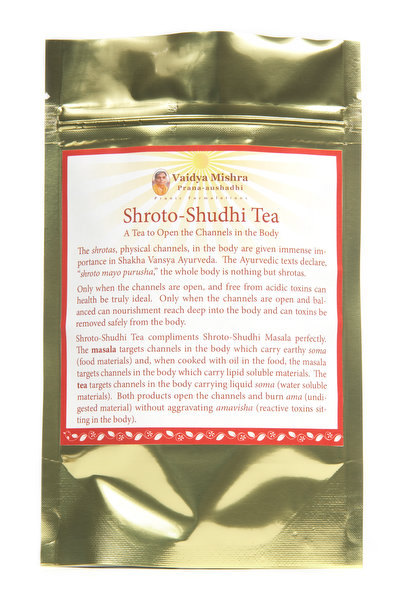
Shroto Shudhi tea is idea for the Fall. Not only does it help clean the channels as its name indicates (“shudhi” = clean, “shroto” = channels), but it also warms them up. The teaWUWACOT-img3 targets channels in the body carrying liquid soma (water soluble materials). This tea helps burn ama (partially digested food material) without aggravating amavisha (reactive toxins sitting in the body).

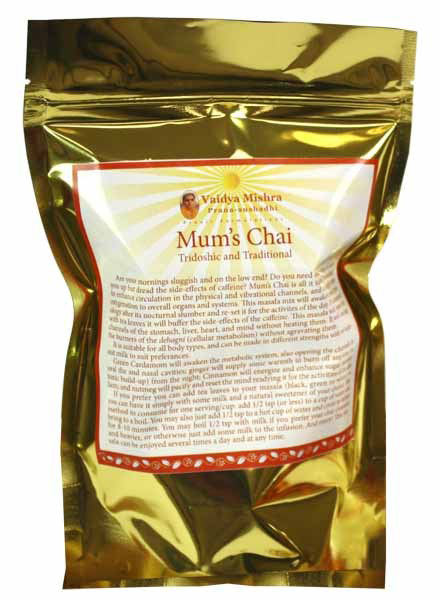
If Shroto Shudhi tea is too much for you, you can start your day with Mum’s Chai Masala. A delicious blend that will gently unclog your channels in the early morning. Here is a special recipe by Vaidya Mishra, follow the steps to get the most delicious cup of “chai”!


For one cup of tea:

  • Put 1 ½ cups water in your pot
  • Add a pinch of Pushkarmool root
  • Add ¼ tsp green cardamom powder – grind fresh for best aroma
  • Add 1/8 tsp crushed black peppercorns – optional if you are high pitta
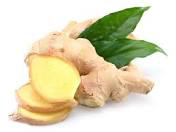
  • Add 1/8 tsp Ayurvedic Sunthi of dry ginger that is great for high pittas and all dosha types, or fresh grated ginger (avoidWUWACOT-img4 if you are a high pitta)
  • Bring to a boil At this point, if you like to make your cup of chai with caffeine, you can add a teabag here and bring to a gentle boil
  • Add milk and bring to another gentle boil
  • Finally, add 1/8 tsp Mum’s chai masala and stir in, bring to another gentle boil and remove from the heat and serve with some unprocessed sugar or raw honey to taste, and enjoy!

The pushkarmool opens the bronchialWUWACOT-img6WUWACOT-img5channels, and gives a very distinct aroma to the tea; the green cardamom, black pepper, and fresh ginger, all help oxygenate the brain by burning away toxic residue in the channels and enhancing the flow of energy overall; Mum’s Chai Masala blend tops off the mixturewith its sweet and gentle aromas of nutmeg and cinnamon, enhancing metabolism, pacifying vata, and kapha.

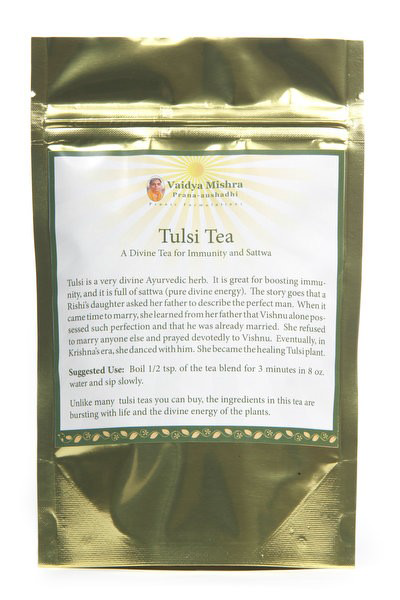
But if chai is too much for you first thing in the morning, you can go for Tulsi Tea. A perfect SVA blend made of many sacred herbs and plants that not only supports your immunity, but is a delicious way to stimulate digestion, reduce kapha and vata, ,WUWACOT-img7 and increase sattwa (spiritual purity) in life. This is especially true with Vaidya Mishra’s Tulsi Tea, which offers the full energy of this powerful herb in combination with other balancing herbs.
Vaidya Mishra’s Tulsi Tea is energetically vibrant.
Lavender calms the mind, rosemary stimulates dehagni (cellular metabolism) and peppermint opens the channels. The combination of these herbs, which areWUWACOT-img8 all fresh and bursting with flavor, gives a balanced blend that your palate will love.

Tulsi (ocimum sanctum, ocimum tenuiflorum) is known as holy basil. The Sanskrit text, Bhava Prakash, describes tulsi as katuka (pungent), tikta (bitter), hridya (good for the heart), ushna (warming), dipani (stimulating digestion and metabolism) and kaphavatajit (reducing kapha and vata). It also says that tulsi is bhutaghni (helpful in removing pathogenic microbes). In addition, tulsi has a divine vibration (devadundubhi) and is sometimes called surasa (liked by the gods).
The Sanskrit name is tulasi, which means “beyond compare.” The purity of divine energy found in the tulsi plant truly is beyond compare.

Here is wishing you many a blissful mornings, warming up and keeping things going smoothly with a lovely cup of tea!

The Power of Pomegranate – from Sutra…

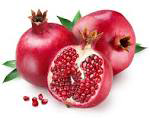
TPOP-img2There is a very famous saying in India: “ek anar saw bimar!” which translates into: “1 pomegranate for a100 diseases.” In indian culture, the pomegranate fruit has been prized as a balancing tridoshic healthy fruit since times immemorial. Bhav Prakash says:TPOP-img1

“Pomegranate tastes astringent, is mild to drink and increases intellect and strength.”
The sweet, not sour, variety is particularly in high demand – the sour variety can cause minor pitta dosha aggravation, even though it can still be beneficial as the sutra below indicates:TPOP-img3

This verse says: “some pomegranates taste a bit sour, hence they increase appetite and taste, causing some pitta dosha aggravation. However, even then, they are beneficial for rheumatic and cough affected persons.”

In general, the pomegranate fruit is known to have a very unique combination of various healing and balancing properties that rarely occur together, as the sutra also indicates:TPOP-img4

“Pomegranate tastes sweet in the beginning, leaving a slight astringent taste at the end. It is tridoshic (balances all three humors of body-vata, pitta and kapha); quenches thirst; helps reduce “fire” in the abdomen; and eliminates fever. It also gives strength to the heart and helps cure ailments of the throat; it removes bad breath; it cools and hydrates; nurtures the reproductive tissue; and gives the body a general sense of lightness [because it enhances circulation].” These are just a few of the pomegranate’s many healing properties; however, it is probably most prized in the SVA lineage for its “grahi prabhava.” Remember that “prabhava” means the ultimate, most subtle, vibrational effect any food item has on the physiology, and “grahi” means absorption. A “dravya” or food item with a “grahi prabhava” means it will help you absorb and get the most out of any food you are consuming. In general, “grahi” or absorbing fruits or TPOP-img5herbs tend to carry warm or hot properties – because you need more “agni” or metabolic fire to absorb more. So, in general, a food that has a higher index of “grahi prabhava” will be more “agneya” or “fiery,” ingeneral, by definition. When a food item is more “agneya,” it means it can increase “pachak agni” (digestive fire), the “bhutagni” (5 metabolic/digestive fires of the liver), or even the “bhrajak agni” (metabolic principle of the skin). But unlike what we would expect, pomegranate is “grahi” yet cooling at the same time. In this sense, it is a great fruit to be consumed by “high pitta low agni” individuals – that is individuals who have high stomach acidity but low digestive enzymes and metabolism.
As a rule, the pomegranate fruit pacifies and balances “pachak pitta” (stomach metabolism), “ranjak pitta” (the heat in the blood), “alochak pitta” (the fire in the eyes), “bhrajak pitta” (the metabolic functions in the skin), and last but not least, “sadhak pitta” or the pitta that manages the emotional heart. All in all, it is a great balancing remedy for all 5 pittas, and high pitta individuals. If we delve a little further, we see that Ayurveda discusses the benefits of pomegranates beyond their physical, nutritional, and dietary content details. This is what goes on in your body, ayurvedically speaking, after you consume pomegranates.

Due to its non-heating “grahi prabhava” or after-effect, particularly in the colon, pomegranate prevents a person from making “ama” (toxins) in the “rasa dhatu” or the clear part of plasma – the first tissue that gets formed after you eat food. Ama in the rasa dhatu TPOP-img7clogs the lymphatic system. Many individuals’ problems lie right here, in that they make toxins of their food, no matter how healthy the food they are consuming, because they just don’t have enough “rasa dhatu agni.” And we know by now that “rasa dhatu” is the raw material for all ensuing “dhatu”-s or tissues in the body. So, in this sense, if “rasa dhatu” produces zero or no “ama” or toxic build-up, then we will not have toxins or “ama” or “amavisha” build-­‐up in “rakta dhatu” (blood tissue) either. “Rakta” or the blood carries a lot of active “pranic” energy, so when it is free from toxins, then organs such as the lungs and kidneys also receive ama-free or amavisha-free healthy blood. In this sense, if an individual is experiencing some issues in their lungs for example, pomegranate is of great help as it supports the flow of clean healthy blood to the lungs by keeping “rasa dhatu” free from toxins.

But there’s more: when you consume pomegranate and it helps burn down the ama from your rasa dhatu, and helps produce better cleaner blood for rakta dhatu, then the heart, as well as the entire cardiovascular system, also receive fully pranic fresh blood and get nourished. Then, ama or toxin-free micro-circulatory channels (srota-s) enhance coordination between heart and mind. Pomegranate, overall, enhances oxygenation to the brain and theTPOP-img8 body, enhancing circulation of nutrients, energy, heat, and more. Scientific research also confirms what ayurvedic knowledge claims, as it acknowledges that pomegranates are good for heart health and the mind.

SVA practitioners know to use pomegranate in many forms and ways (chutney, juice, cooked in the meal) to help support “apana agni” or the digestive metabolic fire in the colon area, to enhance absorption of nutrients. Pomegranates come back into season at the end of summer beginning of Fall, when pitta may still be high in your physiology from the summer heat, causing some Vata disturbances that naturally occur due to the cooler temperatures. Pomegranate will help keep Vata in balance, by cooling off the excess heat in your body, and in any of your pitta sub-doshas. Make sure to consume some pomegranate in your daily diet seasonally, as Mother Nature makes this superfood available to us just at the right time!

Contraindication:

If you tend to have slower bowel movement, or tend to be constipated, you may want to limit your consumption of pomegranate, or replace it with amla berry – SVA Wild Amla, or Amalaki Rasayana, or Nectar drops, or Tamarind and Amla preserve, etc. As pomegranate enhances absorption, it may constipate an individual who already has that tendency.

The Power of Pomegranate – …to Science by Dr-Teitelbaum

In the Fall, pomegranates should be part of your dietary intake as cold/flu prevention. They are only in season from October through February, so take advantage of this Superfood while you can.

Here are 18 health benefits pomegranates have:

  1. Pomegranates, like red grapes, are high in resveratrol and rich in anthocyanins, like blueberries and acai. Anthocyanins protect against inflammation, which triggers cancer, heart disease and aging of the brain. Pomegranates also support healthy lipid levels and resistance to infection through suppressing bacterial and fungal growth.
  2. Anti-aging effects: pomegranates contain plentiful amounts of antioxidants. They rate high on the US Dept. of Agriculture’s ORAC scale (Oxygen Radical Absorbance Capacity) – a measure of how well free radicals are absorbed.
  3. Kidney protection: New research just published in the journal Renal Failure showed that pomegranates prevent kidney damage and protects the kidneys against harmful toxins.
  4. Liver protection and regeneration: More new research published in the Journal Toxicology and Industrial Health showed that pomegranate juice not only protects the liver, it helps it to regenerate after it has been damaged.
  5. Immune-boosting: Pomegranates and pomegranate juice are packed with immune-boosting Vitamin C – an essential and quickly depleted nutrient at this time of the year.
  6. Anti-allergic: pomegranates are high in substances called polyphenols which have been shown to reduce the biochemical processes that are linked with allergies.
  7. Protects against heart disease: New research published in the journal Atherosclerosis shows that pomegranate improves the body’s ability to synthesize cholesterol and destroy free radicals in the vascular system.
  8. Prostate cancer protection: Research conducted at the University of California, Riverside and published in the journal Translational oncology indicates that pomegranate juice caused cancer cell death.
  9. Breast Cancer protection: Scientists at the University of California, Riverside, also studied the effects of pomegranate juice and its nutritional components: luteolin, ellagic acid, and punicic acid against breast cancer. They published their results in the journal Breast Cancer Research and Treatment and concluded that pomegranate juice is “potentially a very effective treatment to prevent cancer progression…”
  10. Skin Cancer protection: Consumption of pomegranate juice was associated with a decrease in both main types of skin cancer – basal cell and squamous cell carcinoma, according to new research in the British Journal of Dermatology.
  11. DNA protection: New research shows that ellagic acid, a phyto (plant) chemical found in pomegranates, binds to the DNA and prevents its breakdown from environmental free radicals. Ellagic acid also supports the body in fighting viral, fungal, yeast and bacterial infections. Ellagic acid prevents the replication of viruses and bacteria in our cells. It can also cause cancer cell death (it stimulates a process known as apoptosis that causes abnormal cells (such as cancer cells) to self-destruct. It also inhibits development of estrogen responsive breast cancer.
  12. Blood pressure normalizing: Early research published in the journal Plant Foods for Human Nutrition found that pomegranate juice may help prevent high blood pressure by preventing stiffness in the arteries, which occurs with free radical damage over time. The more stiff the arteries get, the higher the blood pressure gets.
  13. Metabolic syndrome regulating: Research published in the journal Food and Function shows that pomegranate helps regulate blood sugar, improves the body’s sensitivity to insulin, decreases inflammation, and improves numerous other factors involved in metabolic syndrome – frequently implicated in obesity and often a precursor to diabetes.
  14. Anti-infectious: New research published in the journal Food and Chemical Toxicology found that pomegranates increased the effectiveness of a drug used against gram- negative bacteria. Many gram-negative bacteria are known for drug-­‐resistance.
  15. Blood pressure lowering: Researchers at Queen Margaret University in Edinburg, Scotland found that drinking pomegranate juice lowered blood pressure “significantly” in 90 percent of the group studied.
  16. Boosts sexual desire: Researchers from Queen Margaret University in Edinburgh tested 58 volunteers between the ages of 21 and 64. Men and women drank a daily glass of pomegranate juice for two weeks and experienced a surge in the hormone testosterone, which increases sexual desire in both genders. It also boosted female adrenal gland and ovarian function, raising a woman’s sex drive and strengthening bones and muscles. It also raised mood and memory.
  17. Pomegranate juice is high in 3 different types of polyphenols, a potent form of antioxidants. The three types – tannins, anthocyanins, and ellagic acid – are present in many fruits, but fresh pomegranate juice contains particularly high amounts of all three. They are also high in potassium, vitamin C and low in calories.
  18. Researchers from the Probelte Bio Laboratory in Spain have found that pomegranate juice slows down the natural oxidation (wear and tear) of DNA. The destruction of the ageing DNA was unknown to scientists until this study was conducted and researchers say they are, “excited about this study.” We get old because we fall apart, cell by cell. “One way to look at ageing is to think of it as rusting or oxidizing, a damaging process. The free radicals that oxidize our body’s molecules include fats, heavy metals and numerous other chemical compounds we breathe, eat and drink. If these free radicals reach the DNA of our cells, the damage is cumulative and significant. Being able to guard against this process would be a significant breakthrough,” Dr. Streitenberger (one of the authors of this study) noted.

As you can see, pomegranates are one of the healthiest foods you can eat!

The best news of all is this: you can juice your own pomegranates, which insures no heat or electricity was used, which can damage the delicate nutrients. Also, it will be freshly pressed – as the juice sits on the shelves it loses its pranic energy and nutritional value each day.

You can find several pomegranate presses online. Go to Amazon.com and search for “pomegranate presses”. Look for the one, about $125.00, that is stainless steel and presses manually by hand. (It is one of the first juicers that comes up when you do a search). You’ll notice a definite difference in taste and will feel great after only a couple of days of juicing.

Stay healthy this winter by enjoying your pomegranates while they are in season!

Pomegranate Chutney

Now that we know a little about pomegranate, you can guess that this is not just a tasty sweet and sour chutney with zing in it, but is excellent for helping with problems of digestion, elimination, gas,PC-img1 stomach acid and/or overheating. It is also very nourishing, especially for the physical and emotional heart.

Ingredients:
2 tbsp cumin seeds, ground
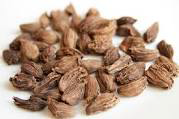
Seeds separated from 7-10 large black cardamom pods, ground (if you can’t find black cardamom, then use green pods, take out the seeds and grind into powder)
2 tbsp Soma Salt
PC-img2¼ tbsp black peppercorns (or just use ground black pepper)
8 tbsp fresh pomegranate seeds in season or dried seeds if seasonally unavailable
1/8 to ¼ tsp lime juice 2-5 tsp raw sugar

Steps:
Grind the cumin seeds in a spice grinder and set aside
Grind the black peppercorns and mix in with the soma salt and set aside
Grind the cardamom seeds and set aside
Grind the pomegranate seeds in a food processor and set aside
If you are using fresh seeds and if desired, use the strainer and a spoon to separate pits from the pomegranate juice then return the juice to the processor
Add salt and ground pepper to the processor containing juice and process until well mixed
Add ground cumin and process until well mixed
Add ground cardamom and process until well mixed
Add lime juice and mix
Add 3 tbsp sugar and mix
Adjust sugar to taste and mix again and you are done!
For serving use 1 teaspoon to 1 tablespoon per person. If you made the chutney from dry seeds, add enough water to make a thick paste.

Frequency of Meals in Ayurveda

FOMIA-img1“Dear Vaidya ji,
I have a question about the frequency of meals as recommended by Ayurveda. I know that a lot of Ayurvedic practitioners are very strict about not having more than a maximum of 3 meals. However, one hears quite the opposite from conventional health practitioners (and even some Ayurvedic doctors). What do you recommend and should the frequency vary with age?
Thanks! Vaishnavi S.”

Dear Vaishnavi: One thing that Ayurveda in general, and SV Ayurveda in particular, stress is that there is not one rule for everybody. Based on prakriti, age, agnibala or strength of your metabolism, ethnic background, and environment climactic, individual details regarding profession, physical activity, etc, the dietary or meal frequency recommendations will vary. So, for example, if a person is pitta pitta, with young age or at the  pittaage (approximately 28-58) with high digestive and metabolic fire, they will have to consume a minimum of 4-5 meals a day. On the other hand, a person with a kapha-kapha type living in a cold and damp environment with low metabolic and digestive fire eating 3 times a day is doing great. So the answer is: try to find a SVA practitioner who can help you determine your needs and who will be able to give you different kinds of spice mixes and protocols, to keep things in optimal balance.

Vit D and B12 Deficiency

“Vitamin D & B12 deficiency. Pain, numbness, and tingling in hands and legs. Dharmendra KM.”

VDABD-img1Dear Dharmendra: please acquire a copy of my SVA Vit D dvd, it will give you total dietary guidance with regards to Vit D. As we know by now, sunlight is the primary source for Vit D, but that is not enough, because many times our liver is so overloaded with toxins it is unable to process and produce Vit D even though an individual may get plenty of exposure to sunlight. So we need to enhance our livers’ ability to transform the sun’s ultraviolet rays to Vitamin D. First VDABD-img2step in this direction is to care for your liver by adopting and keeping a SVA diet. You will find many recipes on my blog, on-­‐line, at www.vaidyamishra.com/blog, and we will be uploading many more in the future. Plus, you can view Malvika in her SVA Kitchen on our YouTube channel, SVA Health. In addition, you may purchase my Transdermal Vit D – strong formula – and apply on your lower back, and armpits twice a day approximately 1-2 grams. You may also use the SVA Vit D Roll-on – easy and practical to use and will still supply you with a good quantity of Vit D.

As for B12, you may purchase and use my SVA transdermal cream, it is easy to use – apply 1-2g on the pulse morning and evening. If you are vegetarian, you may want to consider adding chicken and fish on a regular basis to your diet as they are a good source of B12.

Recipes for Safe Home Detox

RFSHD-img1“Hello. Please accept my respects. Thank you very much for the information about health that you are freely giving. I have written a couple emails previously asking about detox but have not gotten a reply. I’m sorry for pestering. It is spring over here and I am about to embark (taking my husband along which should be interesting) on a 2 month detox program I put together based on self-studied Ayurveda. I know this task is bigger than myself but I would like to try anyway. I am at a loss as to what menu to do apart from kitchari and rotis and cooked greens. I read your article on the detox diet, but my problem is that my husband is a large man (not overweight) with a large appetite, a pitta-kapha type. I think he will be very hungry on your prescribed diet and be likely to quit the program prematurely if he’s hungry all the time. Do you have any recipe books I can buy or even a list of suitable detox dishes I can research the recipes for and practice making. I am already accustomed to cooking some Indian foods. We both love it so we’re halfway there. Thanks for taking the time to read. Again I am sorry to bother you. I look forward to hearing back from you. If anything, [if you could]at least point me in the right direction. Thanks very much.
Best, K. Chapman”

Dear K. Chapman: thank you for your email. Here are a couple of very quick pointers. 1) you may need to incorporate animal protein to keep things balanced for your husband since he is a “large man” as you note. Some chicken and fish are recommended along with the remaining detox ingredients that you mention. Animal protein will keep his digestive fire well stoked without allowing to produce new toxins or ama, that’s when it is cooked with proper spices and in a light manner – no heavy/deep frying etc. Another point, 2) while it is good to have a familiarity with Indian food, because it may serve as a good introduction to ayurvedic food, please note that your detox diet need not use Indian cooking or recipes. What you will need to incorporate are spices for detox, and you may still prepare your meals the western way, but not in a microwave of course! Here is the full Detox Protocol I offer my readers, my Home Detox DVD is also available for purchase from www.chandika.com. Once you purchase this dvd you will be sent a full document that details the dietary protocol for seven weeks, for every meal. Hope this helps.
Thank you.

SVA Panchakarma Retreat?

“Hello there! I’m researching PanchaKarma retreats, and I was told to contact you and ask for a referral. I’m told Dr. Mishra is the best of the best and might be able to SVAPR-img4point me toward a good retreat center. Thank you so much for your time! – Leah P.”

Dear Leah: Thank you! Here at SVA we try our best to bring you the best in terms of ayurvedic services and products. Ms. Bonita Carol, a licensed and certified ayurvedic massage and panchakarma therapist, has established a full equipped ayurvedic amenity in Nevada, where she offers a wide array of ayurvedic services including Panchakarma as well as SVA protocols and treatments. She offers in-house stay with freshly prepared ayuredic meals tailored to the protocol’s needs. We highly recommend her. Her contact information is:

Bliss Ayurveda
100 N, Pine
Nevada City, CA 95959
530 401 8627

You may also want to look up Corinna Maharani in Santa Barbara. Ms. Maharani is also a licensed and certified massage therapist and panchakarma technician who offers high-end ayurvedic massage and SVA Marma treatments in her clinic, you may contact her at:
SVAPR-img3Maharani Ayurveda
1605 Bath Street #2
Santa Barbara
CA 93101
1.805.452-2526