Ayurvedic Crepes? With home-made lime pickle? Plus Date-coconut spread to top it off? Bring it on!
September 11, 2013 by Leave a Comment
We always welcome your contributions to Vaidya’s newsletter, specially when they come to enrich your SVA kitchen! Total health starts with delicious satwic food, made with the proper “samskar” and “samyog” – proper preparation steps and proper combination of ingredients.
Today we share recipes from Sarah M. and Daria S. They are classical recipes from the indian continent, now adapted to our modern lifestyles and confirmed SVA by Vaidya!
Sarah M. sends us a north indian favorite, the “cheela” or crepe! It is a delicious way of consuming protein predominant mung dahl, to have a sustaining yet light meal. Also easy to combine with other dishes and fillers. We leave it up to your imagination!
Sarah writes:
“Dear Vaidya,
“I love your newsletter and am always so grateful for the information you send out. I just wanted to send a recipe that I’ve been making regularly and am really enjoying- perhaps others will like it too. Thank you for always inspiring me towards greater health and wellns.
Blessings, Swati J*
Easy Cheela (Daal Pancake)
Soak 1 cup washed organic split yellow mung daal in water for at least two hrs. Overnight is best.
 Strain daal. Put in a blender with a bit of churna (Mum’s Masala is best), salt and any other herbs (like cilantro, ginger etc.) that you might want to add. Sometimes a bit of turmeric is nice for a golden yellow pancake. Make sure the mix is pourable. Adding more water will make the pancakes more crepe-like, thicker batter is better for smaller and thicker pancakes. mung cheela Heat up cast iron griddle on medium + heat and use a little ghee to make it nonstick. Pour batter onto griddle in desired sizes. Flip when small bubbles appear. Voila! Cheela. Excellent with a simple Palak Paneer or just a good chutney. Larger pancakes make excellent wraps. I usually eat mine with my “Vaidya approved” green protein which creates a very simple, light and wholesome meal. I have been keeping a bowl of daal soaking in the fridge at all times so that I can make a quick daal pancake at any meal. Enjoy!”
Lime Pickle to go with your cheela
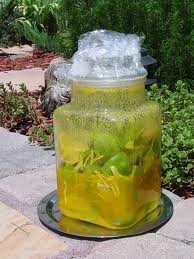
 Here is a delicious Lime Pickle recipe from Daria S. that can go with your cheela, approved by Vaidya! As you know, in our SVA diets, we always favor lime over lemons, due to their alkaline rather than acidic after-effects. lime pickle Lime
pickle is a delicious way of pacifying Vata, alkalizing your body, while you sharpen your taste-buds and hone your digestive agni. You will also get the pleasure of preparing it yourself through simple easy steps. Here’s what Daria sent us.
Ingredients:
Fresh organic limes (20-25) washed and completely dried
½ – ¾ cup Soma Salt
1 tsp cumin seeds
1 Tbsp fenugreek
1 tsp turmeric powder – make sure you toast this and not use it raw so it is gentler on the liver
Glass jar with plastic or glass lid (DO NOT use metal lid as the lime and salt will corrode/rust); best to sterilize the jar and thoroughly dry before use
Instructions:
- Slice limes into thin lengthwise slices (slice in half, then 3-4 slices from each half) preserving the juice; remove any seeds, stems, etc. I wear latex or vinyl gloves when slicing to prevent bacteria from getting into the mixture.
- Place slices into clean, dry jar and add salt
- Shake jar to coat all pieces, and keep aside. Try to expose to sunlight – place on your counter where you receive daily sunlight – for 5-7 days until the limes become tender; shake the jar well at least twice daily.
- Dry roast cumin and fenugreek, then grind to powder
- Add ground spice mixture and the turmeric to the jar of salted lime slices, mix well
- Continue to shake the jar and mix well at least twice daily for 2-4 weeks (depending upon the temperature; the warmer the temperature, the less time it will take to be ready) until the mixture is thick and the limes soft
- Preserve in dry airtight jar; does not need refrigeration.

And top it all off with a delicious date- coconut spread, another SVA approved recipe from Daria: this is a delicious cooling recipe, coconut specially for the hot summer months, and particularly if you tend to be more of a pitta and vata constitution, or have more agni and marut by birth. If you are endowed with a more soma physiology, a fresh date, or a piece of coconut will work best for you for now….

Ingredients
10-15 large organic dates (double the number if they are small)
1/3 cup dry organic, unsweetened shredded coconut or fresh, ground
1 -2 tsp ghee dates
¼ tsp. or less fresh ground organic cardamom seeds to taste
Small pinch mineral salt
Pinch of saffron
Organic lime juice to taste
Cooking Instructions:
- Soak dates in water overnight with the saffron; remove pits
- Blend dates until nearly liquefied
- Grind cardamom seeds
- Heat ghee, add blended date mixture, and then add all other ingredients except lime juice
- Cook for 10-15 minutes on low or medium heat
- Add lime juice (to taste) and mix when somewhat cool

Do you have a recipe or recipe ideas, or questions about food ingredients or items? Send them to us at: livingtradition@prana-center.com, Vaidya will be happy to review them and we can share them with the SVA community at large.
Antagonistic vs Synergistic Inter-actions between Herbs, Food, and Drugs
September 11, 2013 by Leave a Comment
 “Dear Vaidya Mishra: I am an ayurvedic practitioner from the UK. For the past 2 years I’ve been reading your newsletters diligently, following your SVA tips and incorporating them into my practice. I’ve become a big fan of the SVA diet and my clients get a lot of benefit from adopting even some of it, particularly the green protein recipe. With the recent Sutra to Science conference, by raising a red flag about herb/drug interaction, you have brought to our attention a very crucial topic. I wanted to attend your conference but was unfortunately unable to fly in. I am very much looking forward to purchasing the recording of the talks, particularly your talk about the herb/drug interaction, as well Dr. Malvika’s on food. My question is, based on the 6 tastes of food, what is the sutra to scienceapproach concerning food/drug interaction? I thought you would be the best ayurvedic expert, today, to answer this question. Thank you and with much gratitude for all the beautiful and powerful knowledge you put out there. Nancy D. – UK
 Vaidya: dear Nancy, this is a great question. The 6 tastes in Ayurveda are: sweet, sour, salty, bitter, pungent, and astringent. You will see in my SVA conference talk I explain that science discusses 2 possible kinds of interaction: synergistic or antagonistic. Synergistic is when the medicine and the food/medicine work together an increase a particular effect in the same direction; antagonistic is when the medicine and the food/herb fight against each other trying to reduce/decrease each other’s effect in the body, thus causing reactions and problems. In this case, the herb, or spice, or food
 ingredient becomes and antidote for the drug, fights against it directly, or indirectly, by increasing cellular organ detox, taking away the drug and its effect faster than the normal elimination time. Please note that synergistic reactions can also cause problems if they are not wanted or calculated properly
There is also another important point that modern medicine now recognizes, and that is, as your question indicates, the interaction of not only medicinal herbs with allopathic medicine, but of food, in general, with allopathic medicine. So we have to take note that there can be synergistic or antagonistic interaction with allopathic medicine with either: 1) food or spices generally consumed in a regular diet, or: 2) medicinal herbs. Based on these 2 possible routes of interaction, let us briefly examine all the six tastes.
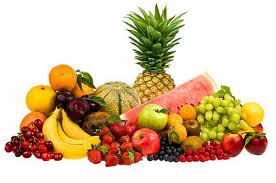 Madhur rasa predominant food: all kinds of sweeteners or sugar containing ingredients -‐ milk, fruits, grains, etc. This rasa predominant food will certainly increase blood sugar levels, and if anyone is experiencing issues with sugar metabolism, or is already clinically diagnosed as a diabetic, that person should not consume or should minimize the consumption of madhur rasa predominant food items. Consuming more madhur rasa while being on diabetic medication will create an antagonistic effect on the anti-‐diabetic drug and also put an unnecessary load on the organs through the effect of this fight.
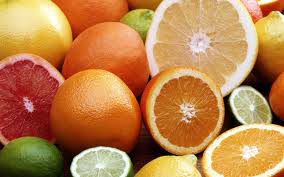 Amla rasa or sour taste predominant foods (For lime, lemon, citrus fruits, berries, apples, vinegar, fermented foods, tomatoes, etc.), even though natural and not synthetic, may interact with your medications in 2 specific ways. Lime may directly affect medications that are processed by the liver. Consuming lime may slow down the effects or completely block the effects of your medications.In addition,lime in particular, and sour foods in general, may also increase sensitivity to sunlight and interfere not only with medicine but with medical conditions such as vitiligo. Or another detail to consider is if anyone is taking anti-‐acid medication, they should avoid this amla rasa or sour predominant foods, as it will synergistically increase acidity or sourness in the stomach.
Salty rasa or lavan rasa has a “kledana” effect, a retentive property. Salt retains water in the body. That’s why salt can raise the blood pressure and is therefore not good for anyone, for example,  experiencing high blood pressure,or also kidney imbalances, renal failure, etc. The kidneys detox the fluids in our body and salt will put added pressure on their functioning. It is commonly known that anyone taking blood pressure medication may experience antagonistic interaction between his medication and the consumption of excess or improper salt. In addition, if anyone is on any diuretic medication, due to the antagonistic effect, the diuretic medicine may not work.
Pungent or Katu rasa food items such as chilies, black and all other kinds of pepper, ginger, garlic, etc: this taste is irritating to the stomach. In addition, it enhances the circulation in the micro-‐circulatory channels and certain pungent predominant spices and ingredients also thin the blood. So if anyone is taking any anti-‐ulcer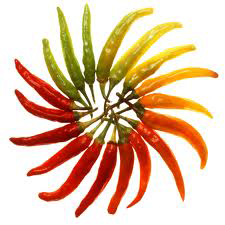 medication,they should not consume any pungent foods or ingredients, it will create an antagonistic interaction. Due to its channel opening properties, if an individual is taking vaso-‐dilating medicine, and consuming pungent foods, they can experience excessive vaso-‐dilation due to the compounded synergistic effect. Any individual taking blood thinners, if/when they consume certain pungent spices, such as: ginger, garlic, they can run the risk of thinning their blood further.
Tikt rasa or the bitter taste, normally stimulates the liver and pancreas, and detoxifies the blood. This rasa can, though synergistic interaction, lower blood sugar levels, leading an individual into unwanted hypoglycemia – too low blood sugar levels. When the bitter rasa awakens the detox processes of the body, any synthetic chemicals tat may be present – and most of modern medicine consists of synthetic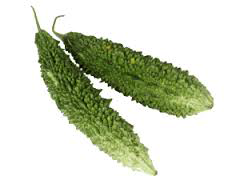 chemical molecules – will be seen as unwanted in the body. When someone is on medication and consumes the bitter taste in therapeutic doses, they are sending signals to their body to evacuate, detox these chemicals faster then they should be, creating an antagonistic interaction between the bitter taste and the medicines ingested, and leading the body to detox from the modern medicine that it needs at that particular point in time. In this situation, the medicine will either have less or zero effect on the body – it will be cancelled out by the bitter. Another example: one of the side-‐effects of the bitter taste can be nausea, so if an individual is on anti-‐nausea medicine, it can create an antagonistic interaction. Here is a brief list of predominant lybitter tasting foods/herbs/spices: neem, karela or bitter gourd, coffee and coffee bean, bitter drumsticks, bitter leafy greans, turmeric.
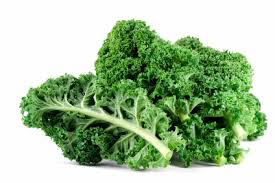 Kashai or astringent rasa: such as greens like Swiss chard, spinach, enhance absorption of nutrients in general, supporting the liver. Some greens though, the ones darker in color, also thicken the blood. So if an individual is taking any blood thinners, it can create an antagonistic interaction by thickening the blood.
So how should an ayurvedic practitioner deal with medical conditions, even as and when they work hand in hand with a medical physician? As you can see, it is not a good idea to avoid food or spices when they create a synergistic interaction. On the contrary, that synergistic power should be used to the benefit of the patient, to help gradually minimize the doses of medication, because in this case food materials will not have unwanted side-effects as they are managed wisely. In this situation, we are attempting to get the desired results from food materials and spices rather than medicine. But just as synergistic interaction is beneficial and can be tailored safely while working with an MD and getting testing regularly by a lab, antagonistic reactions should be avoided. This means: measures should be taken so that a diet should not create road- blocks for the medicine. Food or spices that can potentially reduce or block the effect of any drug should not be used and consumed. Dear Nancy, this is a big topic and a very pertinent question, here I tried to answer it as succinctly as possible. I hope to elaborate on this further in the futue. In the meantime, I hope this helps.
Vaidya respond to a question on Turmeric
September 11, 2013 by Leave a Comment
“I am an ayurvedic student in India and I love your newsletters. Always very deep but very practical. One thing I want to ask you. Why traditionally in India people are suggesting to cook turmeric with ghee or milk or food? What is the scientific reason behind this? Also what is the safest way of recommending turmeric? For high pitta person? Because I heard you on YouTube, I am very happy to see it is the most viewed YouTube on turmeric worldwide. Like you say for high pitta and hot liver it should not be given or given very carefully. Any safety measures? Thank you. Pradeep S.”
 We all know by now that turmeric activates the liver. What does this mean? When it activates, it can increase the pitta of the liver or “bhrajak pitta.” The liver is a hot organ and the ancient rishi-s or seers knew that it was, and that’s why they recommended that turmeric be added to warm ghee first, and then cook that with vegetables. It is scientifically proven that when you cook something with lipids, delivery becomes slower but sustained/steady. It goes slowly but surely to the liver, slowly but surely to the cellular system, so that aggravation of pitta gets minimized. As always, authentic ancient traditions can be scientificall validated – and vice versa scientific validation authenticates an ancient tradition. Although every individual and every individual medical condition is different, be
  careful, becausenull if somebody’s liver is damaged due to disease, you should not use turmeric at all, even in minimal doses. In general, turmeric is Nature’s gift for everybody due to its overall healing properties. That’s why in the ayurvedic shastra-s we find many prescribed methods, many recipes so it can be used and consumed without side effects or creating undesirable interaction.
For pitta situations, a good way of administering turmeric is by cooking it in coconut oil (10% turmeric with 90% coconut oil volume by volume). Cook nice and slow without burning, then drizzle on the food.
Ancient Medicine for Modern Times By Dr Marianne Teitelbaum
September 10, 2013 by Leave a Comment
Boswellia Serrata for your Health
We are all so fortunate to be able to share the knowledge from the timeless archives of Vaidya Mishra’s family lineage. I have been especially honored to be able to sit, side-by-side, with Vaidya for the past 15 years, when he visits my clinic and teaches me, on-site, how to take care of the numerous health problems that I encounter on a daily basis.
I feel the need to share with you some of the practical knowledge I have acquired learning with Vaidya, as it is so simple yet precious. So I have decided to periodically write up case histories, that sometimes even amount to almost miraculous stories. When you how, through the practical SVA teaching, how to use and incorporate divine herbs, there is literally no limit to what you can do with them, how much you can heal with them. I will also be sharing with you any other pertinent tidbits of knowledge that I’ve collected out here in the field.
Since this is the Holiday Season, I begin my first story with a well-known herb, Boswellia. Dr. Mishra gives us the capability of taking it in a glyceride or, as he calls it, Herbal-Memory Nectra drop form, since many people need high doses, and the crude herbs could disrupt the digestive tract when/if taken in large doses over long periods of time.
This is an herb I simply cannot keep on the shelves. It is a powerful anti-inflammatory and works like an Ayurvedic prednisone! It can be used for inflammatory bowel disease, such as ulcerative colitis and Crohn’s disease, for bronchitis and asthma or other inflammation in the lungs and for joint and muscle pains (as in osteo or rheumatoid arthritis).
In all inflammatory processes, there is increased formation of leukotrienes. The key enzyme for leukotriene biosynthesis is 5- lipooxygenase. Boswellia inhibits (stops) the enzyme 5- lipooxygenase from forming.
As their name implies, leukotrienes were first discovered in leukocytes but have since been found in other immune cells.
Leukotrienes regulate immune responses. For example, leukotriene production is usually accompanied by the production of histamine and prostaglandins, which also act as inflammatory mediators.
One of the roles of leukotrienes (specifically, leukotriene D4) is to trigger contractions in the smooth muscles lining the trachea; their overproduction is a major cause of inflammation in asthma and allergic rhinitis. Leukotriene antagonists (Boswellia in this case) are used to treat these disorders by inhibiting the production or activity of leukotrienes.
Leukotrienes contribute to the pathophysiology of asthma, causing or potentiating the following symptoms:
- Airflow obstruction
- Increased secretion of mucus
- Mucosal accumulation
- Broncho-constriction
- Infiltration of inflammatory cells in the airway wall
Almost every time I put a patient on this herb, they come back and tell me how much better they feel since going on it. I am especially grateful for this wonderful herb. Last year I developed asthma after a prolonged bout of bronchitis. I went to a highly revered pulmonologist in Philadelphia from Jefferson University, the most distinguished medical institution in this area.
She told me the only way I could cure my condition was to take a steroid inhaler and a bronchodilator inhaler for several months to clear up the inflammation in the smaller bronchial tubes.
However, my body rejected the inhalers and they actually produced the opposite reaction in me – they closed up my lungs. After taking the Boswellia Nectar drops for 5 months (along with other herbs to heal the lungs) I went back to the pulmonologist for my lung function studies.
The small airways which were only working up to 85% capacity were now working 115%! The pulmonologist was shocked – when I had left her office the last time (in early July) she had warned me that the only way I could heal my lungs was to take the two inhalers. She told me that if I didn’t my condition would worsen to the point where I needed more and more rescue inhalers.
I left her with all the research on the herbs – she told me she’d see me in a year for a quick checkup and she said she was highly interested in learning more about the use of herbs for lung conditions.
As I was researching Boswellia on my own last summer, I found out it also comes under the name of “Frankinsense”. I told Dr. Mishra that the Three Wise Men presented this herb to Christ when he was born and now I understand why. Its capabilities are tremendous!
He told me that the three magi, or the Three Wise Men, were descendants of the Shakaldwipa Brahmins, his own family lineage! I felt humbled to be part of such a divine lineage treating people in this modern day and age with the ancient knowledge of these great seers.
So, as we enter the New Year, I would like to wish all of you happy and healthy holidays and a joyous new year. I hope you enjoy all the stories of my experiences with these wonderful herbs and using all the information of Vaidya Mishra’s SVA lineage. Dr. Mishra has taught me a wealth of knowledge. Ihave loved sitting by his side all these years hearing the stories of the herbs and I am excited to show you some of the miracles I have witnessed over these past 15 years.
Marianne Teitelbaum, D.C.
December 25, 2012
Ancient Medicine for Modern Times: Magnesium By Dr. Marianne Teitelbaum
September 10, 2013 by 6 Comments
Over the next several months, I will be periodically writing about the importance of magnesium in our lives. I want everyone to know how this mineral works on various levels of the physiology. I will be writing several articles, each showing how magnesium works in preventing almost every disease you can think of.
So why is magnesium so important? Why is magnesium considered the “Lamp of Life?”
First, inside chlorophyll is the lamp of life and that lamp is magnesium. The capture of light energy from the sun is magnesium-dependent. Magnesium is bound as the central atom of the porphyrin ring of the green plant pigment chlorophyll. Magnesium is the element that causes plants to be able to convert light into energy and chlorophyll is identical to hemoglobin except the magnesium at the center has been taken out and iron put in.
Chlorophyll systems convert energy from visible light into small energy-rich molecules easy for cells to use.
As Dr. Mark Sircus puts it in his book, Transdermal Magnesium Therapy: “Chlorophyll with its magnesium core is recognized as one of nature’s richest sources of important nutrients where its rich green pigment is vital for the body’s rapid assimilation of amino acids and for the synthesis of enzymes. Thus, hundreds of enzymes need magnesium in order to work, which is why magnesium affects every aspect of our physiology.
Magnesium is needed by plants to form chlorophyll, which is the substance that makes plants green. Without magnesium sitting inside the heart of chlorophyll, plants would not be able to take nutrition from the sun because the process of photosynthesis would not go on. When magnesium is deficient things begin to die. In reality we cannot take a breath, move a muscle or think a thought without enough magnesium in our cells.”
Let’s first see how magnesium’s influence on stabilizing the thyroid gland:
THE IMPORTANCE OF MAGNESIUM IN OUR LIVES. PART 1: THE ELUSIVE THYROID GLAND
This is a common scenario I see almost every day in my practice. I have a patient (usually female, although can occur in men as well), at any age, usually from the teens on through postmenopausal.
They present with all the symptoms of thyroid imbalance: loss of hair, weight gain, muscle cramping, cold hands and feet, irregular menstrual cycles, low energy, heartbeat irregularities, and so on.
They see their doctor and bloodwork is ordered. All the values for the thyroid gland are within normal limits. So the patient tries numerous things for her symptoms:
- prescription medicines for the thyroid from the allopathic doctor
- thyroid glandular and iodine or kelp from the holistic doctor
- ashwagandha from the Ayurvedic doctor
But nothing seems to work. The patient becomes frustrated as the symptoms continue to mount.
The problems continue, because the real issue is not being addressed.
First, we need to see what is draining the thyroid – going to bed late, rushing through the day, stress, hyperactivity, too much talking and overuse of the senses.
Then we need to make sure the diet is healthy – I will not go into details on the diet since most of you know this by now.
But then the patient needs to understand this very important point as well: THE SYMPTOMS OF MAGNESIUM DEFICIENCY ARE IDENTICAL WITH MANY OF THE SYMPTOMS OF THYROID DISEASE.
So now let’s address this very important issue.
When calcium and magnesium are not in balance the thyroid is affected. Magnesium carries calcium into the cell. The lack of magnesium will cause calcium to stay on the outside of the cell and build a “calcium shell” which allows a low cell hormone permeability. This means the thyroid hormones cannot get into the cell because they cannot pass through the calcium buildup. So the person is making enough hormones, but they can’t get to their targeted site.
Many patients complain of irregular heartbeats or a fast pounding heartbeat. The primary function of magnesium that is critical in thyroid disease is that it enables the muscles to relax. With inadequate magnesium, the muscles cramp. Many of our patients describe leg or foot cramps or “Charlie horses”. But when this happens to the heart muscles, the heart does not go through a complete relaxation phase then the next contraction begins before the relaxation is complete. This results in rapid heartbeats and/or an irregular heart rate known as an arrhythmia.
If magnesium is low, the Vitamin D levels will be low since magnesium plays a role in the metabolism of cholesterol and Vitamin D is made from cholesterol. If Vitamin D goes low, then thyroid function will be affected. And conversely, Vitamin D, a fatsoluble vitamin, aids in the absorption of magnesium into the cells.
Magnesium is found in the blood and the spinal fluid and is the only electrolyte found in higher concentration in the spinal fluid than in the blood.
The reason for the large magnesium content in the spinal fluid isthat the mineral is necessary for balancing the stimulating effects of the body’s hormones. The purpose of thyroid, gonadal, adrenal and other hormones is to charge up or excite the body. Magnesium tends to slow down and relax the system, thus regulating the hormones and achieving a happy medium.
When magnesium is deficient there is no regulation. This can cause osteoporosis, periodontal disease, epilepsy, hyperirritability, overactivity, and nervousness. Magnesium is important in bone formation (more details about this in another article). If deficient, the bone tissue suffers and the hair falls out.
And finally, magnesium deficiency can cause low levels of DHEA. Known as the “mother of all hormones”, DHEA is converted in the body into several different hormones, including estrogen and testosterone. This hormone (DHEA) is made in the adrenal cortex, along with cortisone, hydrocortisone, and aldosterone. These steroid hormones are created from cholesterol. However, cholesterol cannot be synthesized without magnesium. So if magnesium is low, it begins a cascade of hormonal deficiencies, including the thyroid, adrenals and sex hormones.
It is estimated that 80% of people in developed countries have magnesium deficiency. Here are the common causes:
- Synthetic Vitamin C competes with magnesium absorption and thus depletes it in the system (it’s better to eat the fruit containing the Vitamin C than to take synthetic Vitamin C supplements)
- Poor diet
- Water which is lacking minerals from the earth
- Prescription drugs
- Stress
- Eating sugar – it takes 50 molecules of magnesium to process one molecule of refined white sugar, which quickly depletes magnesium
- Diabetes causes the body to flush out important minerals, including magnesium
- Malabsorption – lack of friendly bacteria in the gut
- Taking synthetic calcium supplements
- Alcohol, coffee, soda and birth control pill use
- Synthetic oral Vitamin D – it binds the magnesium (I will be writing an article about the transdermal Vitamin D that Vaidya Mishra makes in another article – this is safe to use and won’t deplete magnesium)
Foods high in magnesium are:
- Whole wheat
- Coconut
- Spinach (cooked)
- Avocado
- Sunflower seeds
- Dandelion greens
- Raisins
- Green peas
- Blackberries
- Beets
- Broccoli
- Green leafy vegetables (cooked)
- Orange juice (fresh-squeezed)
So, until the magnesium levels are normalized the thyroid function will continue to be low, even if the patient is on the thyroid medicine, glandular or ashwagandha
It is recommended that magnesium be taken transdermally (through the skin) since taken orally will upset the intestinal tract and the kidneys
We have several transdermal ways of getting this important nutrient: Dr. Mishra has made for us: Relaxing and Detoxifying Bath Pouches (used in the bath – soak in the tub for 20 minutes using one bath pouch each time)
- these have high quality and highly absorbable magnesium Dr. Mishra isolated out of his soma salt.
We also have Vata Oil with Magnesium and Vitamin D. Do a 20-minute oil massage as many days a week as time will allow
And an upcoming article will feature the new Magnesium Rollon Dr. Mishra will be putting on the market soon –– we are eagerly awaiting this much-needed remedy! I personally will be prescribing this for every patient of mine.
So now, you can see we have several ways to address this imbalance, thanks to the foresight of Vaidya Mishra and his family lineage of Shaka Vansya Ayurveda (SVA), which have been treating patients transdermally for over 5,000 years.
Dr. Marianne Teitelbaum
Cinnaminson, New Jersey
856-786-3330
Comfortably Cool with Coconut
September 10, 2013 by Leave a Comment
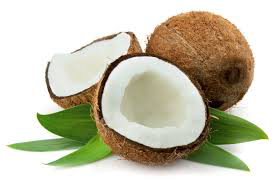 Vaidya explains that based on the natural ayurvedic cycle of “sanchay” (accumulation), “prakop” (aggravation), and “prashaman” (pacification), summer is the time for the “sanchay” or accumulation of pitta, while late summer and early autumn is the time for the “prakop” or aggravation of pitta. That is why, Coconut kind of dravya-s (edible materials) are good for consumption now, as they pacify the end of summer “prakop” or accumulation of pitta. In this article, Dr. Teitelbaum reminds us about this all-in-one wondrous fruit, a favorite of the ayurvedic shatra-s or texts, and modern science as well!
… In Ayurveda, coconut is considered to be a “mahamedhya” which means it is a great nourishing source for the “medhya” or the mind. It is also known to have the “santarpana” property, meaning it supplies balanced fatty lubrication for the brain.
In addition, coconut is “trishna nigrahan:” it removes excessive thirst. It is also “rasayan” – it nurtures the cellular system….
 Based on the natural ayurvedic cycle of “sanchay” (accumulation), “prakop” (aggravation), and “prashaman” (pacification), summer is the time for the “sanchay” or accumulation of pitta, while late summer and early autumn is the time for the “prakop” or aggravation of pitta. That is why, Coconut kind of dravya-‐s (edible materials) are good for consumption now, as they pacify the end of summer “prakop” or accumulation of pitta. In this article, Dr. Teitelbaum reminds us about this all-‐in-‐one wondrous fruit, a favorite of the ayurvedic shatra-‐s or texts, and modern science as well! In addition, you can also watch Malvika in her SVA Kitchen, to learn how to make coconut chutney, savory coconut chips, or coconut probiotic milk, on Vaidya’s YouTube SVA Health channel.
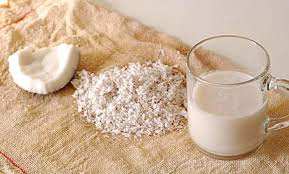 Coconut is a favorite “dravya” or material in the SVA tradition. Vaidya recounts that whenever he traveled in the summer, in India, raw coconut water would be his preferred rehydration drink. Street peddlers would sell whole raw coconut ready to be chopped open on the spot for thirsty travelers – the best support against humid heat and dehydration. The sutra-‐s say that coconut water and coconut is very rich in “soma,” but Vaidya reminds us that coconut water has liquid soma, which is not clogging, while coconut pulp or flesh has earthy soma, which can clog, particularly if someone has low agni or slow metabolic fire. Coconut oil, on the other hand, is soma predominant agneya, so it’s easier on metabolism even though it can cause some kapha aggravation or heaviness. But it’s not all.
In Ayurveda, there is an interesting precept called “svarup guna” perhaps best translated as: “what you see is what you get”! In other terms, it is the idea that shape (or form) and function are intimately connected. This means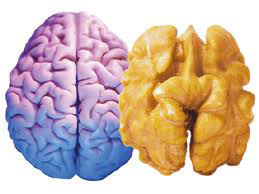 that the shape gives away the properties that we can expect. The best quickest example is to think of the walnut and how it is shaped like the brain. In addition, we know now that a walnut is, in comparison to other nuts, very high in omega-‐3 fatty acids, which supports and nourishes the brain. The walnut looks like a brain and is a great food for the brain.
In this sense, a coconut is said to look like the skull, a dravya or food item that nourishes the skull and what it houses: the brain. In Ayurveda, coconut is considered to be a “mahamedhya” which means it is a great nourishing source for the “medhya” or the mind. It is also known to have the “santarpana” property, meaning it supplies balanced fatty lubrication for the brain.
In addition, coconut is “trishna nigrahan:” it removes excessive thirst. It is also “rasayan” – it nurtures the cellular system. It is only contraindicated if an individual has high kapha imbalance or is a high kapha body type, and carries clogged channels, has low metabolic fire or low agni, or has high shleshak kapha or too much lubrication naturally.
More specifically, it is to be avoided if an individual has imbalances with overall circulation (shleshak kapha) or congestion in the chest area in general – bronchitis etc.. Here is what Dr. Marianne Teitelbaum found, in modern research, on Coconut water and milk. Coconut water and milk have innumerable health benefits. She says:
“Coconut is highly nutritious and rich in fiber, vitamins, and minerals. It provides many health benefits and possesses healing properties. It is used extensively in traditional medicine among Asian and Pacific populations. Pacific Islanders consider coconuts to be the cure for all illnesses.

The coconut is so highly valued by them as both a source of food and medicine that it is called “The Tree of Life”. Only recently has modern medical science unlocked the secrets to coconut’s amazing healing powers.
In traditional medicine around the world coconut is used to treat a wide variety of health problems, including the following: abscesses, acne, asthma, baldness, bronchitis, bruises, burns, colds, constipation, cough, dysentery, earache, fever, flu, gingivitis, gonorrhea, irregular or painful menstruation, jaundice, kidney stones, lice, malnutrition, nausea, rashes, scurvy, skin infections, sore throat, swelling, syphilis, toothache, tuberculosis, tumors, typhoid, ulcers, upset stomach, weakness, and wounds.
Modern medical science is now confirming the use of coconut in treating many of the above conditions. Published studies in medical journals show that coconut, in one form or another may provide a wide range of health benefits. Some of these are summarized below:
- Kills viruses that cause influenza, herpes, measles, hepatitis C, SARS, AIDS and other illnesses
- Kills bacteria that cause ulcers, throat infections, urinary tract infections, gum disease and cavities, pneumonia, and gonorrhea and other diseases
- Kills fungi and yeasts that cause candidiasis, ringworm, athlete’s foot, thrush, diaper rash and other infections
- Expels or kills tapeworms, lice, giardia and other parasites
- Provides a nutritional source of quick energy
- Boosts energy and endurance, enhancing physical and athletic performance
- Improves digestion and absorption of other nutrients including vitamins, minerals and amino acids
- Improves insulin secretion and utilizations of blood glucose
- Relieves stress on pancreas and enzyme systems of the body
- Reduces symptoms associated with pancreatitis
- Helps relieve symptoms and reduce health risks associated with diabetes
- Reduces problems associated with mal-‐absorption syndrome and cystic fibrosis
- Improves calcium and magnesium absorption and supports the development of strong bones and teeth
- Helps protect against osteoporosis
- Helps relieve symptoms associated with gallbladder disease
- Relieves symptoms associated with Crohn’s disease, ulcerative colitis, and stomach ulcers
- Improves digestion and bowel function
- Relieves pain and irritation caused by hemorrhoids
- Reduces inflammation
- Supports tissue healing and repair
- Supports and aids immune system function
- Helps protect the body from breast, colon and other cancers
- Is heart healthy: improves cholesterol ratio reducing risk of heart disease
- Protects arteries from injury that causes atherosclerosis and thus protects against heart disease
- Helps prevent periodontal disease and tooth decay
- Functions as a protective antioxidant
- Helps to protect the body from harmful free radicals that promote premature aging and degenerative disease
- Improves utilization of essential fatty acids and protects them from oxidation
- Helps relieve symptoms associated with Chronic Fatigue Syndrome
- Relieves Symptoms associated with benign prostatic hyperplasia (prostate enlargement)
- Reduces epileptic seizures
- Helps protect against kidney disease and bladder infections
- Dissolves kidney stones
- Helps prevent liver disease
- Is lower in calories than all other fats
- Supports thyroid function
- Promotes loss of excess weight by increasing metabolic rate
- Is utilized by the body to produce energy in preference to being stored as body fat like other dietary fats
- Helps prevent obesity and overweight problems
- Applied topically helps to form a chemical barrier on the skin to ward off infection
- Reduces symptoms associated with psoriasis, eczema and dermatitis
- Supports the natural chemical balance of the skin
- Softens skin and helps relieve dryness and flaking
- Prevents wrinkles, sagging skin and age spots
- Promoted healthy looking hair and complexion
- Provides protection from damaging effects of ultraviolet radiation from the sun
- Helps control dandruff
This long list of health benefits comes from the fact that the type of fat in coconuts is a medium-‐chain fatty acid (MCFA). 98% of all the fats we eat consist of long chain fatty acids (LCFA). It’s the medium chain in the coconut oil that makes it different from all other fats and for the most part gives it its unique character and healing properties.
Medium chain fatty acids are easily digested, absorbed and put to use in nourishing the body. Approximately 50% of the fatty acids in coconut fat are lauric acid, a fat found in mother’s milk. Lauric acid has the beneficial function of being formed into monolaurin in the body. Monolaurin is the antiviral, antibacterial, and antiprotozoal monoglyceride used by the body to destroy lipid-‐coated viruses such as HIV, herpes and influenza.
Unlike other fats, they put little strain on the digestive system and provide a quick source of energy necessary to promote healing. This is important for patients who are overcoming serious illness or injury. Even athletes are now using them to boost performance and control weight.Unfortunately, few foods contain this type of fat; the best source is from coconuts – fresh, not canned – the canned coconut milk is lacking all the vitamins and minerals in the fresh product.
 So now you have 4 ways to use a coconut – just tapping into the top soft hole of the coconut, and pouring out the coconut water an drinking it immediately (once it is taken from the coconut, the nutrients start to oxidize, make sure it does not taste sour or rancid/old), making a cultured probiotic drink from the coconut water (see Malvika make it on You-‐Tube) making freshly made and highly nourishing coconut milk (blend the coconut meat with water and strain) and using the dessicated coconut meat left behind after making the coconut milk. Keep in mind that we normally do not recommend eating or cooking with coconut oil unless you have a
strong digestive fire, since it is a cold fat, too heavy and hard to digest. You could, however, massage the body with it during the summer or anytime if you have excess pitta (heat) in the system or rashes on the skin. Some people say that using coconut oil for their daily oil massage actually makes their rash a little worse. This can happen due to the coldness of the coconut oil closing up the pores in the skin, making it difficult for the heat to escape, thus creating a buildup of heat and a worsening of the rash (or eczema, etc.). We have an oil called “SVA Pitta Abhyanga Oil” which has herbs cured into it to prevent the pores from closing up, which will help give you the benefit of the cooling coconut oil without the side effects of the heat getting trapped under your skin. Keep in mind that the skin absorbs all the beneficial nutrients in the oil; you don’t have to swallow and digest the oil to gain its benefits.
Adding some coconut to your daily regimen, either through your diet, or transdermally, through Vaidya’s creams or oils, can only be a great step towards optimizing your health mental and physical.”
Why Oil Yourself for Detox ?
September 10, 2013 by Leave a Comment
 The ancient ayurvedic sages knew that a lot of toxins are lipid soluble. Without the availability of our modern technology they understood that many toxins settle their residence in the fat tissue and getscarried and dispersed through the fat molecules. In this sense, Bitter detox oilthe fat tissue and fat molecules of the body easily become the host for these fat soluble toxins. When allowed to sit for extended periods of time, these toxins may cause irreversible damage.
 When Vaidya formulates an herbal massage oil, he extracts the lipid soluble molecules of the herbs into the oil and couples them in such a way that they carry a detoxifying or “shodhana” effect along wiPitta with magnesiumth the nurturing, “santharpana” and pacifying “shamana” properties.
This week we highlight the launch of Vaidya’s 3 new body massage oils: the Pitta with Magnesium, Turmeric with Magnesium, and Bitter Detox Massage oil.
Why Magnesium? Magnesium is an oil-soluble mineral which has all three desired properties that support the overall health of the body: shodhana santharpana and shamana. Vaidya’s new oils have been formulated to supply santharpana and shamana in order to avoid unbalanced uncontrolled detox or shodhana. Whenever you do a detox program and you pull out and evacuate toxins, you have to replace those toxins with nutrients in order to complete the process. In addition, you need to pacify the specific subdoshas that you may have imbalanced through that de-tox. These oils have been formulated to address your daily safe and effective detox through balanced herbal synergies.
 These oils also contain a perfect selection of essential oils – all 100% natural. These essential oil act like “yog-vahi”s, they are the carriers that transport the herbal molecules into the nooks and crannies of your system faster and more effectively.
It is best to use any of these massage oils in the morning. Warm a bottle up in your sink under running hot water, then apply in the palm of your hand and massage your extremities and body (if using the Bitter Detox oil, apply only below the knees and elbows, or only the feet). Leave on for 20 minutes then shower off.
Amla is Dhatri – Nurturing like Mother’s Milk!
September 10, 2013 by Leave a Comment
One day, during one of our many conversations, my father told me that turmeric the spice, Guduchi the Amrita plant, and Amla, the berry or fruit are the best ingredients of Ayurveda. I asked why? He replied:
 Turmeric, because it detoxifies the liver;
- Guduchi, because it cleans and rejuvenates the cellular system;
- And Amla, because it is innocent like mother’s milk and has the greatest Rasayana or rejuvenative effect on the body.

Another name for Amla in the ayurvedic tradition is dhatri- one that nourishes like mother’s milk and is without side effects. My father explained that every ingredient in Ayurveda deserves to be studied in all its details, covering all aspects from its common use to its processing. When it came to the Amla, I learnt that he favored the generic wild harvested amalaki berry over any of its existing ‘hybridized’ forms. I have, since then, researched this personally and come to appreciate the wisdom of his ways.
Amla is Dhatri – nourishing like mother’s milk….
One day, during one of our many conversations, my father told me that turmeric the spice, Guduchi the Amrita plant, and Amla, the berry or fruit are the best ingredients of Ayurveda. I asked why? He replied:
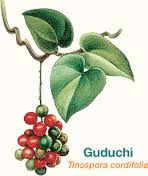 Turmeric, because it detoxifies the liver;
- Guduchi, because it cleans and rejuvenates the cellular system;
- And Amla, because it is innocent like mother’s milk and has the greatest Rasayana or rejuvenative effect on the body.
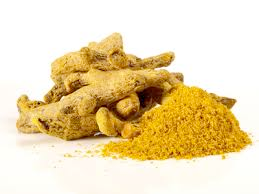 Another name for Amla in the ayurvedic tradition is dhatri- one that nourishes like mother’s milk and is without side effects. My father explained that every ingredient in Ayurveda deserves to be studied in all its details, covering all aspects from its common use to its processing. When it came to the Amla, I learnt that he favored the generic wild harvested amalaki berry over any of its existing ‘hybridized’ forms. I have, since then, researched this personally and come to appreciate the wisdom of his ways.
There are dozens of reasons why amla is the one fruit that you can consume safely on a regular basis regardless of what body type you have or any other details. For more details you can watch my youtube video, but here is a short list of what it can do for you at a quick glance:
- Amla is the number one ingredient for protein synthesis, it will nourish and maintain your muscle tissue and enhance absorption and digestion of protein, nurturing and balancing your brain health as well
- It is a powerhouse of Vit C as it contains a particular molecule of Vit C that does not decompose and does not have an acidic but rather alkaline after-effect in your body
- It is a-mala-ki: no mala or toxin ‒ in this sense it supports your digestive system, strengthening your pachak agni so your body makes less or zero ama or toxic build-up ‒ the number one cause for eventual disease. As a result of correction digestion and assimilation, it facilitates optimal elimination
- It is called “vyastha” ‒ it bestows everlasting youth because it is balancing to all body types, and highly alkalizing
- When digestion and elimination are balanced, toxin are not produced and do not stand a chance of accumulating in your skin ‒ Amla supports the health and glow of your overall skin
- Due to its alkalizing pitta dosha balancing effect, it helps support the liver to detoxify the blood
- Out of the 6 possible tastes that are known to balance the psycho-physiology of humans, amla contains all 5 except for salt (sweet sour bitter astringent pungent); it is thus fullybalancing in and of itself not just for the physical body, but for the mind and emotions as well ‒ for all 3 psycho-physical body types: vata pitta and kapha
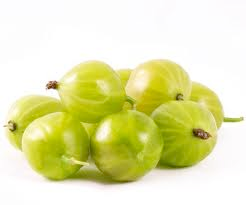 It is a hormonal modulator for both men and women, maintains optimal hormonal health and enhances fertility in both men and women
- It is a “medhya” : considered particularly nourishing for the brain and its 3 functions of mental activity: “dhi dritti and smritti” ‒ gathering storing and recalling.
- Last but not least, it is revered as a rasayana: while many herbs will have many wonderful lifesupporting properties, not all will carry the property of rasayana or rejuvenation. The Amla berry is famed for being a rejuvenative: it nurtures and supports the health of your body from the inside out, and has an effect on your consciousness as well. It raises your “satwa” or positive pranic energy flow and distribution.
There are yet many more properties and benefits to it. I list more in my youtube video, click on the link in the newsletter. But you have to be careful!
Due to its great healing and balancing properties and characteristics, its great popularity as an ayurvedic plant1, the amalaki berry has been widely harvested and hybridized, resulting in a common popular fruit that carries very little of its original healing properties. My father had taught me to look for and identify the wild harvested generic fruit that is much smaller in size, with a larger seed, and less yield, but with all the great properties of the fruit. In addition, he also taught me very specific protocols for preparing the fruit so as to get the most out of it.
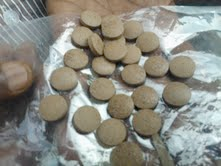 The Process of SVA Wild Amla Preparation
In the Shaka Vansiya lineage we have a very particular method of preparation that has made for the popularity of my Wild Amla herbal formulation for the last 10 years. So much so that competitors have now been trying to market
1 It is one of the oldest oriental medicines mentioned in Ayurveda as potential remedy for various ailments since the fruit is rich
in quercetin, phyllaemblic compounds, gallic acid, tannins, flavonoids, pectin and vitamin C and also contains various
polyphenolic compounds. A wide range of phytochemical components including terpenoids, alkaloids, flavonoids, and tannins
have been shown to posses useful biological activities. Many pharmacological studies have demonstrated that the fruit shows
antioxidant, anticarcinogenic, antitumour, antigenotoxic, anti-inflammatory activities, supporting its traditional uses. See
Amala, Protein Synthesis, and Human trials in Journal of Applied Pharmaceutical Sciences “Phytochemistry, traditional uses and
cancer chemopreventive activity of Amla (Phyllanthusemblica): The Sustainer.” (2011) Ekta Singh, Sheel Sharma, Ashutosh
Pareek, Jaya Dwivedi, Sachdev Yadav
amla products of a lesser grade through my own words. They copy the knowledge without delivering the goods. They even use the adjective “wild” on their labels. You have to be very careful in selecting your amla product.
We just received a new batch at www.chandika.com. It took much longer than anticipated and we’ve been out of stock on this product for the past several months. Our SVA team in India was gathering all the wild fruits they could find. Since it is the wild fruit, the yield is less and sporadic. When we finally gathered enough, our technical staff very carefully cleaned and then processed the fruit on low heat over long periods of time. Our current tablets are not as dark as our previous batch, as we have further refined our manufacturing processes to get closer to the ideal SVA manufacturing methods. In this batch, our tablets are not as dark as they were in previous batches, and this does not mean that they are less concentrated. We have made each tablet more efficacious by processing them less to bring out more potency and efficacy. It’s the method of extraction vs slow-cooking.
If you are curious, these are some of the steps that we follow: we gather fresh grade A wild Amla berries that are pitted to remove the seed and filter out the fiber. Wild Amla is then pulped and dried at low heat. Another fresh batch of Amla is juiced to be added to the dried pulp. This mixture is then blended thoroughly. This process of drying pulp and juicing is repeated eleven times before the final preparation of the dried tablets. Preparation of Amla is time-consuming and labor intensive. The low heat drying is critical in this preparation because of the high content of Ascorbic acid in Amla. So much ascorbic acid that some researches claim 1 fresh Amla berry equals 16 bananas and 3 oranges2. The heat sensitivity of ascorbic acid dictates that the vitamin and other nutrients of Amla are best preserved with the juicing process. Research has shown that applying high heat to ascorbic acid results in a darker color, this can be an indication of bleaching3. Our wild Amla maintains the balanced level of ascorbic acid as shown through its lighter color achieved from the slow pulp-and-juice preparation. The current batch uses this process.
Recent researches have also concluded that Amla enhances protein synthesis4 . In my practice, the dictum of Ayurveda remains that if one’s digestion, assimilation, and synthesis of protein is in balance, then one achieves a balanced physiology.
Many cancer patients have now come to rely on Amla for its chemo preventive properties with less danger of herb-drug interaction.
There is no end to lauding the benefits of this ancient berry. In general, for daily usage, taking 1 tablet after breakfast and 1 tablet after lunch is recommended. For specific health needs, the dosage can be increased to 3 tablets after breakfast and 3 tablets after lunch. Or it is always best to consult with your SVA expert.