Black Turmeric? Hing? Soak Quinoa? Kalonji? And more…

Dear Readers:
Is the transdermal use of Castor oil ok? Is it ok to use Black Turmeric? How much daily dose of yellow turmeric? Do we have to soak quinoa? What about Kalonji seeds? And many more questions that Vaidya received recently. To send us your own questions, you may email us at: livingtradition@prana-center.com or simply visit Vaidya’s website at www.vaidyamishra.com and click on the “Ask Vaidya Mishra” tab on the top left side.

Castor Oil and Macular Degenerative Eyes

“Vaidya Mishra,
I read your Castor Oil Question & Answer [Ricin Toxicity – Castor Oil ~ June 6, 2013 – Vaidya Mishra’s Newsletter #23, Volume 3]. . .and am concerned. . .I have been using it to remove my facial & eye makeup. . . thinking it was good for the skin & eyes. . .and based on Edgar Cayce Readings. . .it is so healing for many issues?!?!? The ingredients on the bottle: Pure, Cold Pressed Ricinus Communis (Castor) Oil ~ Certified by periodic laboratory tests to be free of pesticide residues. Please advise. . .and/or what would you recommend for Macular Degenerative Eyes. . .I am Pitta. . . I so wish to heal & protect my eyes. . .and keep my eyesight! Om! Shanti! Jan”

Dear Jan: I have not seen any side-effects, so far, from the topicalBTHSQ-img1 application of castor oil. However, you being a pitta constitution, I would certainly recommend you don’t use it. Try to find some alternative pitta pacifying, or at least, non-pitta aggravating, nourishing oil. Jojoba is a good alternative. But you may like to try my own formulation, the Lalita’s Facial oil. Many women love this product and use it as a make-up cleanser. It has a very balanced blend of nourishing herbs and a very light floral aroma. See if it works for you.
Otherwise, for your eyes, you should stay under the supervision of your medical eye doctor, but here are some ayurvedic tips. The eyes are an “agneya” fire organ, so they get affected when pitta is out of balance. You want to maintain a pitta balancing lifestyle and diet. For starters, Wild Amla is highly pitta pacifying, and nurturing for the eyes. It will be a good addition to your diet. You can have one tablet in the morning after breakfast.

DGL or de-glycerized licorice transdermal cream is very cooling and soothing for high pitta. Apply a small amount on the back of your neck on your cervical area, before going to bed, that will cool off your eyes.

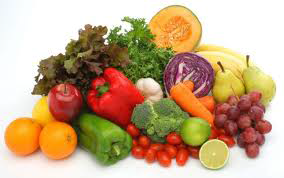
Try to eat as many multi-colored fruits and vegetables as possible. Colored fruits and vegetables contain carotenoids. Carotenoids areBTHSQ-img2 yellow, orange, or red fat-soluble pigments, including carotene, which gives fruits and vegetable their colors. Research findings indicate that those who consume a diet rich in carotenoids from fruits and vegetables are healthier and tend to have less risks of developing eye diseases.
In general, avoid pitta aggravating foods and activity. Never skip or delay meals. Go to bed by 9pm latest, before pitta time. Read my Summer Booklet (available on www.chandika.com). It has many tips and guidelines for cooling off and balancing pitta, in general, and specially in the summer time.

Ganglion Cyst on Finger

“Dear Vaidya-ji,
Please can you tell me how to dissolve a ganglion cyst on the top of my right ring finger. It came there after drinking whey from panir for 10 days. It was too sour for me. How can I get rid of that lump? I am in very good health. Thank you. Regards, Bharati B.”

Dear Bharati: try using Mahakanchenar Transdermal cream followed by Prakrit transdermal creams (available at www.chandika.com) 3-4 times a day, apply and massage gently but consistently. Try this for 10 days. If, after 10 days, it does not go away, you may want to consult with your medical physician to get it surgically removed – this is a safe and effective routine procedure.

Kalonji Seeds?

“Namaskar Vaidyaji, I recently learned a lot about Kalonji oil or black seed oil being used for health. I have never heard any vaidya prescribing it. However, my mom has mostly used the seeds along with methi seeds to prepare turka for daals. What is your opinon on using Kallonji oil for health and weight loss purposes, please advise. Thanks, Ajay S.”
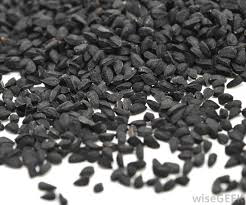
BTHSQ-img3Dear Ajay: I recommend kalonji (or kalunji) in therapeutic doses in cooking on a regular basis. It’s a very good spice for hormonal modulation or balancing. But according to our tradition, it should always be used along with cumin, fenugreek, fennel, and ajwain. Your mom was already using it with fenugreek, which is wonderful. Kalonji is almost tri-dosha pacifying, that’s why it should always be used in moderation. Regular balanced usage can help the digestive system, the hormonal system in men and women, the eyes, hair, muscle toning, and joints. Here is a good recipe you can use in your meals. Mix the ingredients in the following proportions and then grind in a coffee grinder. You may occasionally use the whole seeds as well in the same proportions, if you prefer.

Masala Recipe

1 part kalonji seeds
1 part fennel
1 part ajwain
1 part fenugreek

Use ¼ to ½ tsp per person, sauté in ghee and add to your dhal or rice.

How Much Turmeric Daily?

“Since I found Mr Vaidya Mishra with all of his teachings and knowledge, I began following his recommendations and buying some products. For instance, I just bought ghee and turmeric, but I need a little more information regarding turmeric. Since I live in the west coast, the only way to clarify my questions regarding the products Mr. Mishra sells, is through the internet.
1. If a person in “not” sick, how much turmeric is recommended daily when cooking (how many tsp a day?)
2. If one feels sick, (fibromialgia, arthritis), how many tsp(s) a day? With gratitude, Moni R.”
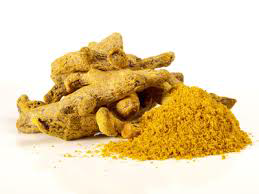
BTHSQ-img4Dear Moni: please go to my SVA Health Channel on YouTube and watch the video on “How to use turmeric.” In general, for a healthy person, I recommend ¼ to ½ tsp turmeric powder cooked or sautéed in gheein added to your meal with lunch and dinner.
Remember: NEVER consume raw turmeric, as it can heat up the liver too much too quickly. And never consume large amounts of turmeric alone. Always cook it in ghee or with your vegetables and protein. My YouTube video will give you additional details. If someone has a medical condition as you mention, they should always check with their medical physician concerning whether they should consume any turmeric at all.

Hing and Celibacy?

“Is Hing something to be avoided by celibates? I’ve read that it’s an aphrodisiac, tamasic, and pitta aggravating. Thanks. Roger P.”

Dear Roger: Yes you are right. Hing (or asafoetida), is an oleoresin native to India, and used widely in cooking as well as for therapeutic purposes. It is used for flatulence, for indigestion, etc. However, it can be highly pitta aggravating. It should only be used in specific instances to pacify kapha and vata. When consumed by pitta individuals, it can overheat the physiology and act as a tamasic agent. It will trigger tamasic sexual energy when consumed unnecessarily – not in order to correct an imbalance but just as an addition for flavoring etc. It is then best to avoid it if one is celibate – specifically a pitta celibate!

Bhumi Amla for Hepatitis C
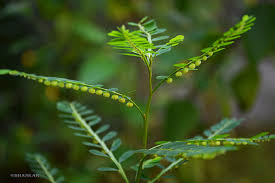
BTHSQ-img5“Sir, Please, advise me about the bhumi amla , since my uncle is suffering with liver cancer in the category c (hepatitis) patient age is 67yrs .your word of advice will work wonder. Wait in for your kind revert, Vikas S.”

Dear Vikas: yes, the sutras in the ayurvedic texts on Bhumi amla as well as contemporary research indicate that it is a potent plant that can restore balance to the liver and help with many liver conditions. However, in Ayurveda in general, but in my SV lineage in particular, we do not believe that one single herb can be the full answer for a specific disease or condition. No one single herb or ingredient can help correct a disease on its own. It has to be total care, encompassing the use of many different modalities and medicinal herbs. In addition, this has to be done under the supervision of an ayurvedic expert working in parallel with a medical doctor. I would recommend you take steps in that direction. Hope this helps.

Policystic Ovaries

“I am 36 years old and have Polycystic ovaries. I am trying to conceive but suffer from irregular periods. I am not sure when I ovulate. I want to become pregnant soon. Currently I am taking ayurvedic tablets which contain a mixture of Manjistha, Shatavari, Gokshur and Haritaki. I am taking another tablet which contain triphala guggul, kutki and shilajit. Can you give me your suggestions. SK”

Dear SK: It seem to me you need full guidance from an ayurvedic expert who will help your condition through SVA diet, ayurvedic Transdermal creams, as well as Nectar drops. If you live in the United States, I recommend 2 excellent physicians who are also SVA experts. You may contact either one of them: 1) Dr. Marianne Teitelbaum in New Jersey at 1.786.856.3330, or 2) Dr. Douglas Beech in Maryland at 1.301.951.9000.

Soaking Quinoa?

“Should quinoa be soaked? My understanding is that like nuts & beans, it contains phytic acid which binds to magnesium, calcium, iron and zinc and prevents the absorption of these minerals. Bitter saponin also coats the seeds and is toxic. If true, how long should we soak it? Nancy M.”

Dear Nancy:

Yes it is true. Quinoa contains Phytic acid which stores phosphorus in plant tissue. It is indigestible for humans. It also chelates (when ions and molecules bind metal) minerals such as zinc, iron, or even calcium and magnesium.

In addition, quinoa contains saponins – a toxic foaming molecule. It presence is indicated through the bitter taste in quinoa. This is beneficial during cultivation as it deters birds and other animals from consuming it butBTHSQ-img6 is toxic for human consumption – a mild eye and respiratory irritant, as well as gastro-intestinal irritant. Even though most of the quinoa sold commercially in North America has been processed to remove this saponin coating, it is best not to ingest it long term.
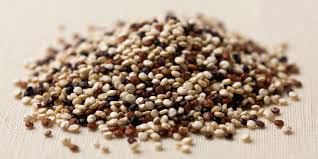
In order to make sure you do you not ingest phytic acid or saponin, you may soak your quinoa as you suggest. You may soak ½ to 1 cup overnight and cook in the morning. However, here is a better way: rinse and then cook you quinoa with excess water. Either in a rice cooker or on the stove top. When you cook it with excess water you have to monitor it to make sure you don’t over cook it until it’s soggy and you have mushy texture. When your quinoa is cooked to the right consistency, remove from the pot, and strain it, and then rinse once more with warm water. Removing phytic acid and saponins through this cooking procedure is the best way, and you don’t have to soak your quinoa seeds then.

Black Turmeric or Yellow?

“Hello,
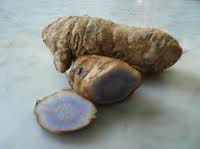
BTHSQ-img7We only heard/talked/mentioned about yellow Turmeric. Researches never distinguished the benefits between Yellow and Black Turmeric. Recently, my friend who is a Chinese OMD, said that yellow turmeric is good for stomach, and black turmeric is good to fight with cancer cells.
My grandmother also used only black turmeric when she lived in Laos 70 years ago. Because there were no yellow turmeric in the village or the villagers know that black turmeric was different with the yellow one? What kind of turmeric is good for prostate cancer. I wish you can shed a light on this issue. Thank you, Lavender A.”

Dear Lavender: yes there are 2 types of turmeric, yellow and black. Black turmeric is known as Curcuma caesia. It grows in North-East as well as Central India. Its medicinal use is prominent amongst many tribalBTHSQ-img8 communities – ingested orally in preparations or used transdermally as a paste. Due to its bluish black color, resembling the skin color of many Hindu deities, it has been used as a talisman, to ward off evil spirits, as well as an ingredient in some occult rituals.

In our SV tradition, things are different. We do not use black turmeric in our daily cooking, as it is considered to be highly pitta aggravating. Why? Black turmeric can stimulate the liver to excess. This can be a problem because when the liver is over-stimulated, it can over-trigger the immune system.

Yellow turmeric is not just for the stomach. It is fully supportive of the liver and other organs as well. The chemical contents of yellow turmeric are very balanced, so when used properly and daily, you can get all the medicinal benefits without incurring any unwanted side-effects. It is best to stick with yellow turmeric, and to use it daily in cooking. Never ingest it in capsules, or alone. Hope this helps.

Thank you, Ellen

“I saw this article about indigenous Indian vegetables and thought about SVA-you and SVA practitioners like Divya Altar and BVT Life in NYC are helping to maintain and encourage their use with your recipes and recommendations. Very cool! Ellen S.”
BTHSQ-img9

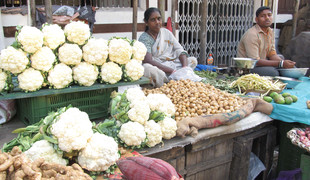
Vegetable vendors sell a combination of products, but more of commonly preferred vegetables than of indigenous varieties. Photo: Sangeetha Rajeesh

Biodiversity
21.05.2013
Time to explore the native veggie

Growing indigenous vegetables is on the decline in India – despite increases in vegetable production as a whole. Experts fear that this could have disastrous consequences for the population’s food situation.

According to the Indian Institute of Vegetable Research (IIVR), the country has produced 146.5 million tonnes of vegetables (including roots and tubers) during 2010 – 2011, placing India second globally. Given that Indian vegetable production is threatened by climate change, dwindling natural resources, uneven growth as well as unequal nutritional richness across the country, National Horticulture Board schemes appear to have concentrated more on the development and management of commercial horticulture rather than on encouraging sustainable cultivation of indigenous vegetables. More and more organisations are warning against the negative impacts that this could have on the population’s food situation.

The Asian Vegetable Research and Development Centre (AVRDC) began to work in India in 2006. Its current projects include improving vegetable production and consumption for sustainable rural livelihoods in Jharkhand and Punjab; as well as looking at the possibility of exploiting bitter gourd (Momordica charantia L.) to increase incomes, manage type 2 diabetes, and promote health. Dr. Warwick Easdown, Regional Director of the AVRDC South Asian regional office, says that their three-year old research on a smaller variety of bitter gourd that reduces blood sugar levels is very promising and that they will have confirmed results by end of 2014. “There are several indigenous vegetables that provide specific health benefits. Amaranthus (greens) is one that has four times more protein than cabbage, nine times more iron and 15 times more vitamin A when compared to ‘wellknown’ vegetables.” But the stigma attached to indigenous vegetables in India has led to a steady decline in cultivation, Easdown says.

“The ‘well-known’ vegetables are easier to grow, manage and sell, and seed availability is not a problem,” observes Easdown. “By contrast, the native vegetables have always been associated with poverty. They don’t look attractive and therefore never end up in the rich consumer’s food basket.” He warns that there is an urgent need to spread knowledge about the heritage, nutrition and calorie values of traditional vegetables in India and improve their intent beyond local-level markets. Unless money can be made from indigenous vegetable production, they will disappear … and so will traditional cuisine, he fears.

The untapped potential

However, this is not the only problem. Professor M S Swaminathan who is Member of Parliament and Emeritus Chairman of the Chennai-based M S Swaminathan Research Foundation (MSSRF) observes that changes in daily diets as a result of disappearing native vegetable varieties are contributing to widespread protein and nutrition deficits. “When I was young,” he recalls, “our diet consisted of a wide range of beans, cucumbers, tuber crops and leafy vegetables, many of which have vanished today.” He remembers the earlier versions of dishes like avial, a typical South-Indian preparation with at least one dozen vegetables that had a number of indigenous sorts. “This is also gradually disappearing now,” he adds.

Moringa Oleifera or drumstick are indigenous to India and have been a backyard crop for as long as one can remember. The pods and leaves are cooked and served in various forms in the South of India almost every day. “The drumstick leaves are very rich in a wide range of micronutrients, but unfortunately, the National Horticulture Mission only promotes the cultivation and marketing of modern vegetables like cabbage, cauliflower, green banana etc. and does not give attention to the vanishing indigenous vegetable crops,” Swaminathan observes. Research has established the importance of the drumstick tree in combating malnutrition, especially for infants and nursing mothers.

Easdown confides the lack of precise statistics on the list of Indian indigenous vegetables as a whole. There is even less on those near extinction. Many local varieties are grown in backyards, mostly for home consumption and never reach the commercial domain. “India continues to be a huge source of untapped vegetables and perennial indigenous herbs, shrubs and tree vegetables. They are our answers to alleviating hunger and malnutrition plus to improving health,” Easdown adds.
According to N Anil Kumar, Programme Director of the Community Agrobiodiversity Centre, located at Wayanad, Kerala, and functioning under MSSRF, genetic variation in legumes and underutilised vegetables is of prime importance for successful breeding. Therefore, active participation of breeders, i.e. seed companies, is crucial. Researchers should identify the indigenous vegetables based on their agro-diversity and then allow for clear and concise characterisation. “This will help build nutrition literacy among end consumers,” Kumar feels.
From Punjab Makhana or fox-nut seed (thingzang in Manipur), a red, bitter berry called shundakai in Tamil Nadu, to lesser-known greens such as cephalandra, locally called kundru ki bail, Indian pandan, weeds such as gumma and water spinach alongside leaves of chickpea, ash gourd and pumpkin, all need to form part of our daily consumption alongside potatoes, cauliflowers and carrots, the staples across the country.

The need of the hour is research

Speaking on ADVRC’s work in the area of vegetable research, Easdown says that they have always promoted home gardens to encourage vegetable production and thereby better nutrition security. “AVRDC hosts a legume breeding programme focusing on improved varieties of mungbean (green gram) and vegetable soybean; we also encourage cowpea and yard-long bean cultivation,” he says.

AVRDC also carries out research into indigenous vegetables as part of its ongoing effort to diversify the range of vegetables. “Promising indigenous vegetables need research, and Moringa has a great potential to contribute to nourishment because all parts of the tree are edible,” Easdown informs, adding that research into this valuable tree has been an ongoing effort at AVRDC for more than a decade.

MSSRF, through their nutritional security programme, encourage backyard nutritional gardens for home consumption. This is done with chilli, drumstick, lemon, papaya and yam to provide nutritional needs of households. The institute has also an integrated community centred approach to address hunger and malnutrition through volunteers within village communities. These volunteers promote local remedies for prevailing nutritional maladies like the cultivation and consumption of drumstick, along with ragi or other locally grown millets. Leafy vegetables that can provide iron and fibre are also promoted

Dr. Anil Kumar of the Community Agro-biodiversity Centre says that under the biodiversity programme, their work is on “strengthening integrated conservation and practical use of genetic resources of neglected and underutilised crops and rare, endemic and threatened plants.” The problem is that for years, the government has done nothing to preserve and promote diversity. “We found that many of the varieties and species have been phased out of the farmers fields due to neglect by the state research and development system. For instance, we discovered about 20 traditional varieties of yam and six to eight of taro on farms largely restricted to home gardens of the Malabar region, Kerala,” Dr. Kumar informs. Preference is given to one or two tuber crops like cassava and potato, and if this continues, all other tubers crops will disappear, he fears. And Swaminathan adds: “By restoring the culture of consuming indigenous vegetable crops, we can make a major contribution to overcoming protein deficiency and hidden hunger. I hope the National Horticulture Mission will also include indigenous vegetable cultivation within its scope.”

India’s horticultural sector

Global diversity in vegetable crops is estimated at about 400 species, with around 80 species of major and minor vegetables reported to have originated in India. A recent study published in the open access journal Phytokeys says that the cucumber family (Cucurbitaceae) – pumpkins, melon, cucumber, watermelon, bottle gourds, and bitter gourd – can be traced to India. Molecular data has recently revealed that both cucumber (Cucumis sativus L.) and melon (Cucumis melo L.) are indigenous to India and likely to have originated from the foothills of the Himalayas. Some facts in brief: India is globally

  • the second largest producer of fruits and vegetables,
  • the largest producer of mango, banana, coconut, cashew, papaya, and pomegranate and
  • the largest producer and exporter of spices.

The country ranks first in the productivity of grapes, banana, cassava, peas, and papaya.
In the year 2012 alone, export growth of fresh fruits and vegetables in term of value is 14 per cent and of processed fruits and vegetables is more than 16 per cent.
In fact, an area of 21 million hectares is under horticulture in India and contributes over 230 tonnes of vegetables to the food basket of the country.

Source: Indian Council of Agricultural Research
Author: Sangeetha Rajeesh, freelance journalist, Chennai, India

Raw Milk, Yogurt, and Kefir : a Question

Thank you Sally for sending in this question. Vaidya Mishra’s response in italics and red.

“Hello Friends at the Prana-Center, Thank you for all the wonderful knowledge, inspiration and recipes in the newsletters.
I’m hoping you will be able to let me know Vaidya Mishra’s thoughts about the following questions:
1.Is it okay to drink fresh raw organic milk, cow or goat, without boiling it first? Some people say milk should always be boiled, according to Ayurveda.
Yes, according to classical Ayurveda, milk should always be boiled. Shaka Vansiya Ayurveda explains this in terms of Soma, Agni, and Marut. With SVA we understand that milk is a liquid-soma predominant dravya or material, that is: it is soma in liquid form. We know by now that soma is the propertyRMYAKQ-img1 that makes any dravya or  black pepper material heavier so that it will need strong agni or metabolic fire to get transformed and digested, and to allow for the full synthesization of the protein content of the milk in this case. This is why it is better to boil the milk. Boiling the milk infuses the vibration of agni energetically into the milk, so the milk can get easily broken down in the digestive system and metabolized, and its proteins better synthesized. In the ayurvedic tradition milk is further “warmed” with spices such as cardamom pods, cinnamon sticks, black peppercorns. Cardamom enhances the break-down of the protein molecules; black pepper opens the circulatory channels and thus counters the clogging e fect of milk due to its high soma content; cinnamon supports the metabolization of the naturally occurring sugar content in milk. When you boil milk with these spices, RMYAKQ-img2additional interaction happens on the more subtle molecular levels and make the milk lighter and more easily digestible to the body. Otherwise milk can remain in the body undigested or semi-digested and it can create ama or toxic build-up in the form of semi-digested food material. We know that ama is the seed of all physical diseases. There is no disease without ama by ayurvedic  cardamomdefinition. But you may ask: if we have to boil the raw milk, why not just buy pasteurized milk? In Ayurveda, we believe that boiled milk should be consumed within 24 hours, because after 24 hours, vibrational as well as subtle molecular changes occur and the energy of the milk is altered. In Ayurveda, particularly cow’s milk is considered to be a divine but also very delicate dravya or material. I hope that science will be able to discover and prove this point eventually. So the necessity of boiling is not just out of sanitary concern. It has to do with the “alpa-abhishandi” or somewhat heavy and clogging properties of milk. In order to get the most out of your raw milk, you then need to allow it to interact with agni, boil it, and/or add spices to it.

2. Same question re making yogurt: is it okay to use unboiled warm raw milk for this?

We do not recommend to use unboiled raw milk for making yogurt because the yogurt then receives even more earthy energy. Yogurt is also considered “abishandi”, that is clogging to the physical and vibrational channels, because of the earthy nature of the friendly bacteria it contains.RMYAKQ-img3 When milk is pre-boiled and then made into  cinnamon yogurt, it carries some agneya or fiery digestive/transformational energy into the yogurt so the yogurt becomes lighter and more agneya on the digestion and the channels. The friendly bacteria in the milk may die when you boil it, but remember that you are re-infusing more bacterial colonies when you make the yogurt! The idea is that it is ok to sometimes lose something in order to gain something more than what you may have lost. The ultimate goal is for the body not to make ama. How do you know you are making ama? Your tongue gets a white thick coating in the mornings, you feel sluggish after a meal, your stomach area feels blocked and heavy, and you feel you do not digest f od well. You can make ama out of useful good food materials too, if your digestive agni is not in top shape and is not performing well. The ultimate goal is to maintain an ama-free body. The concept of agni and ama is a very big thing in Ayurveda. No other health science has this kind of concept. Everybody’s agni level is different based on age, season, ethnicity, individual body type. This is why we have different recipes for milk and yogurt in Ayurveda.

3. What are Vaidya’s thoughts on live kefir culture? Is it okay to use this as well as normal yogurt starter?

Normal yogurt starter is better. It is more satwic in nature. It has a history in the shastras. Yogurt starter is easier on the colon, it will not  kefir overwhelm it.RMYAKQ-img4 Kefir carries high yeast which may overwhelm the immune system by jump-starting it. If an individual has a sensitive immune system they can experience complications or additional symptoms when ingesting kefir. Also: yogurt and buttermilk are not contraindicated for pregnant women, or different medical conditions, unlike kefir.

4. Also is it good to use the yogurt making system with coconut milk (i.e. water blended with coconut flesh and strained) as well as with coconut water?
   SVA recommends making the coconut yogurt only with the coconut water. Coconut is also considered a heavy fruit, in that it needs proper metabolic fire. When you make yogurt out of its flesh it becomes too heavy for most individuals to be able to consume without making some ama out of it. But just using the coconut water is good. You get the health benefits of the coconut without the clogging properties of the physical coconut flesh.

I look forward very much to your reply. I appreciate that this info may be in a newsletter that I haven’t seen, so please direct me there if so.

With very best wishes

Sally B.”

A question from Kyle K. who said:

“Hello, I had a question about probiotic beverages such as kombucha and eating yogurt within the 24 hour period of consuming things like turmeric. What is your stance on kombucha and yogurt? [Some very prominent ayurvedic practitioners in the USA] […] [have] been supportive of both, I’d love to hear your take on it. Thanks again for making such great deodorant and ghee. I’ll be sure to order again soon.”

Kombucha Wonderland: Can we Sip our Way to Perfect Health?

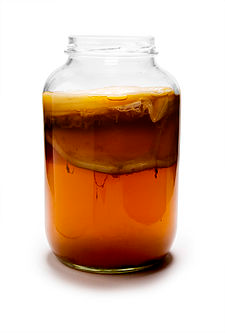
AWFKKWS-img1You may not have tried it yet, but you have probably heard of Kombucha (kom-BOO-cha) somewhere somehow because it has taken over our imagination and the market since the early 1990s –Whole Foods Market only recently removed the drink from its shelves because it contains alcohol as a result of the fermentation process. Kombucha tea is also known as Manchurian tea, or Manchurian mushroom; or Kargasok tea; or simply “tea fungus” or “tea mushroom.” It originated in East Asia. It was introduced to Germany at the turn of the century and reached the American continent in the early 1990s when the publisher of “Search for Health”, a bi- monthly magazine in Naples, Fla., touted its virtues.1 But what’s the big hype about anyways?

Seemingly, a one-size-fit-all healing nectar, Kombucha tea has been promoted as a cure-all for a wide range of conditions including aging, anorexia, arthritis, atherosclerosis, cancer, constipation, diabetes, gallbladder disease, gout, hemorrhoids, hair growth and color restoration, headache, hypertension, HIV, immune boosting, indigestion, increased vitality, treatment of alcohol and coffee addictions, and wrinkle reduction. How come? Supporters say that Kombucha tea can boost the immune system and reverse the aging process. Kombucha tea is said to contain antioxidants, compounds that block the action of free radicals (activated oxygen molecules that can damage cells). For people who have cancer, proponents claim the tea can improve the body’s defenses (especially in the early stages of cancer) by detoxifying the body and enhancing the immune system. But how does it work, if at all?

1 Mr. Valente became the American distributor of one of the few books on the subject, “Kombucha: Healthy Beverage and Natural Remedy From the Far East,” by Gunther W. Frank (Wilhelm Ennsthaller, Austria, 1991).

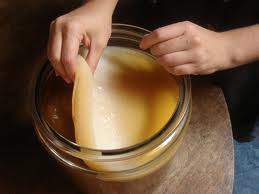
AQFKKWS-img1Kombucha tea is made by fermenting sweetened black tea with a culture of yeasts and bacteria called the “Kombucha mushroom” – it is not actually a mushroom, but is called one because of the shape and colorof the sac that forms on top of the tea after it ferments. The white, gelatinous blob of about 12 inches in diameter propagates quickly. It is brewed by placing the fungi in a glass bowl with three quarts of cooled black tea that contain one cup of sugar. It is then covered with cloth and placed in a dark, warm place for a week to 10 days, until it spawns a second disk. The tea is then strained and stored in glass in the refrigerator. The culture contains enough antibiotic to discourage bacteria and its high acid content is quite resistant to invasion by foreign organisms. The tea does not become sufficiently acidic until it has fermented for four or five days. When fermented, the Kombucha creates a sparkling beverage that tastes like hard apple cider.

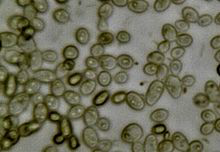
AQFKKWS-img2Dr.Jeffrey Gates, who studied the medicinal properties of food at Cornell University, has analyzed Kombucha tea and said that the hope it offered for better health should be tempered. The tea, he said, appears to work primarily in the gastrointestinal track and because it is high in certain acids, it may make it easier for the body to absorb vitamin C and certain B complexes. But, he added, “the anti-carcinogenic qualities of Kombucha are not as great as other folk remedies, such as garlic and yogurt.”2 What about adverse side-effects? Mr. Stamets researched the Kombucha for a pharmaceutical company 15 years ago. He found that “the Kombucha is not a mushroom, but several yeasts living symbiotically with several bacteria that produce a powerful antibiotic […] It could be a fabulous addition to drug therapies, […]but we have little idea of what it is, no idea what its side effects are and no doubt that it can become contaminated by spores in the air. You could kill yourself or your friends with a contaminated culture.” 3

Contamination and yet more adverse effects

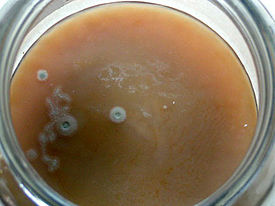
AQFKKWS-img3The culture used in Kombucha tea varies, but consists of several species of yeast and bacteria.4 Because there are several types of yeast and bacteria that can grow under distinct conditions, different Kombucha brews may contain different types. Of course, since cultures and preparation methods vary, Kombucha tea may contain contaminants such as molds and fungi, some of which can cause illness. In addition,after the tea is fermented, it is usually highly acidicand contains alcohol, ethyl acetate, acetic acid, and lactate. In April 1995, two women who had been drinking the tea daily for 2 months were hospitalized with severe acidosis — an abnormal increase of acid levels in body fluids. Both had high levels of lactic acid upon hospitalization. One woman died of cardiac arrest 2 days after admission. The second woman’s heart also stopped, but she was stabilized and recovered. The mushrooms used by both women came from the same “parent” mushroom. While no direct link to Kombucha tea was proven in this case, the U.S. Food and Drug Administration (FDA) warned consumers to use caution when making and drinking the tea.5 In 2009, a 22-year-old man was hospitalized with trouble breathing, fever, confusion, and high lactic acid levels within 12 hours after drinking Kombucha tea. He recovered, but his doctor believed that the tea was the cause of his lactic acidosis – a rare but serious and often fatal condition. 6 Here is another case of intoxication. It was a case of hyperthermia, lactic acidosis, and acute renal failure within 15 hours of Kombucha tea ingestion: a 22 year old male, newly diagnosed with HIV, became short of breath and febrile to 103.0F, within twelve hours of Kombucha tea ingestion. He subsequently became combative and confused, requiring sedation and intubation for airway control. Laboratories revealed a lactate of 12.9 mmol/L, and serum creatinine of 2.1 mg/dL. Several case reports exist of serious, and sometimes fatal, hepatic dysfunction and lactic acidosis within close proximity to ingestion.7 While Kombucha tea is considered a healthy elixir, the limited evidence currently available raises considerable concern that it may pose serious health risks as it may be associated with life-threatening lactic acidosis.8 Deaths have been linked with the excessive drinking of the tea as shown. In addition, several experts warn that since home-brewing facilities vary a great deal, the tea could become contaminated with harmful germs. These germs could be especially dangerous to people with HIV, cancer, or other immune problems. Anthrax of the skin has been reported, as has jaundice, a yellowing of the skin and eyes that is usually caused by liver damage. Allergic reactions, possibly to molds in the tea, have also been reported.9

Rigorous scientific evidence for or against kombucha is still slim, especially since the existing studies and article citations refer to (as you can see for example on pubmed.com) studies originating in China or India, and consist of testing done on rats or mice. Human tests have not been conducted. Only a few papers tested effects on human cancer cells in vitro. Some beneficial effects were seen but one study concluded that “Comparable effects and mechanisms in humans remain uncertain, as do health safety issues, because serious health problems and fatalities have been reported and attributed to drinking kombucha.” 10

In short, available scientific evidence neither supports nor claims that Kombucha tea promotes good health or prevents ailments, neither does it discard it potential health benefits, even though several serious side effects as well as occasional deaths have been linked to its consumption.11


So what are we to do?

Here is Vaidya’s response.

With the growing technologies of our times, we are not only experiencing the shrinking of geo-spatial distances, but the cross- contaminationof cultural trends – both desirable and undesirable! Kombucha is not the first “alien” item to have penetrated western culture. Soy, for example, is another one. Such foreign food items initially come with great marketable promises of a long history of healthy and safe usage. While there can be much benefit and much to be learnt from exposure to ancient cultures and civilizations, the ayurvedic shastra‐s always recommend we be careful in adopting anything new too readily. This applies even to protocols and formulas from Ayurveda, as I have always repeated this over the past two decades. Ayurveda’s precepts also need to be adapted to our current psycho-physiological needs. My formula has always been “sutra to science” – taking the age- old knowledge to make sure it works for us now, and is also in line with the scientific findings of our age that confirm their eternal truths.

So when it comes to kombucha, the question really is not whether kombucha is a miracle cure or another misleading fad that can cause more harm than help, but whether we can appreciate how kombucha, along with soy and all the many other herbs and ingredients that have travelled thousands of generations and miles to reach us, are part of a greater more complicated cultural and healing protocol(s) that needs to be considered as well. Once we extract such ingredients from their greater whole, we are sure to create more trouble than help. The consumption of soy thousands of years ago by Asian cultures cannot be used as a confirmation of its total health benefits for us today if we are not taking into account the amounts they consumed back then, the ratio of soy in their diet in relation to other ingredients, the actual physical state of their bodies and the kind of work it was submitted to back then, and the lack of exposure to constant EMF radiation that our bodies have to go through with the use of machines and electrical devices today. The agni or digestive metabolic properties of the human living thousands of years ago cannot be compared to our current one, even though the physiology is the same, the mode of operation is not the same. The modern human body has to deal with many more stressors that were not in existence then.

The scientific world has not yet made its statement about Kombucha, but we can determine what Ayurveda has to say about this new ingredient by studying it through the ayurvedic precepts. The big hype about Kombucha is brought about by its pro- and pre- biotic properties. Now, more than ever, we are becoming aware of the essential necessary healthy properties of a well‐populated gut.

Kombucha is touted to be an espresso shot of friendly bacteria! But let us consider the unwanted attachments that accompany it:

  1. Kombucha is highly acidic as maintaining acidic conditions are favorable for the growth of the kombucha culture. An acidic environment is also important to inhibit the growth of molds and bacteria. The pH of any given kombucha batch range from 2.5 and 4.6. A pH of less than 2.5 makes the drink too acidic for normal human consumption, while a pH greater than 4.6 increases the risk of contamination.12 In addition, many bat chesare made by using vinegar instead of tea as a starter, givingit an additional acidic nature. While this low pH helps the mixture resist contamination by airborne molds or bacterial spores, it also reduces the body’s pH dramatically and can result in greater harm than good. Due to this content of vinegar as well as caffeine (from the black or green tea leaves), the body is not able to buffer this low pH. We have learnt that low pH harbors inflammation in our bodies, and inflammation makes our bodies prone to many imbalances that can result in chronic ill-health.
  2. Fermented food products, such as Kombucha, travel much faster in the body as they are more agneya, carrying the properties they are endowed with and delivering them in deep tissue and organ levels. This is why, in general, results or side-effects are quickly visible. But on the flip side of this, harm is also accomplished much faster – within 12 hours as we saw in the some of the medical cases cited above.
  3. ) Sugar and Vinegar: refined white sugar and vinegar in general are of course not desirable as we have learnt through SVA. These further lower the body’s pH and immunity. If good quality sugar and vinegar are used, then the issues of the acidity of the mixture still predominates.

12 http://www.organic-kombucha.com/kombucha_and_ph.html

13 Department of Nutrition and Food Science, Utah State University entitled: Survival of Lactobacillus acidophilus and Bifidobacterium bifidum in Ice Cream for Use as a Probiotic Food (http://www.sciencedirect.com/science/article/pii/S0022030292778953)

Having said this, I would recommend taking a safe and effective route, adopt the vedic way of supporting the pre- and pro-biotic bacteria in your physiology, or the “yogini”-s as they are called in Ayurveda. Having a healthy thriving population of yogini-s in your gut is essential not only for the proper absorption of minerals and nutrients from your food, but these yogini-s also help to connect your brain, your mind with your body overall; in addition, they help support and boost your immune system. For more information on this, please refer to our first volume of the SVA news letters where you will find a full article on the topic (available on www.chandika.com).

So the best thing you can do, without running the risk of aggravating pitta or lowering your body’s pH is to eat specific foods. There are many ways to eat your probiotics safely, evenas ice-cream! A study conducted in 1992 by the Western Dairy Foods Research Center13 found that probiotic ice cream is a suitable vehicle for delivering beneficial microorganisms such as L. acidophilus and B. bifidum to consumers. The bacteria can be grown to high numbers in ice cream mix and remain viable during and from storage.

But if ice-cream is not really your thing, then consider good old home- made fresh yogurt. This is, hands down, the best time-tested pro-biotic. We have learnt that in order to maintain a good population of pro-biotic bacteria, we need to have also an optimal level of nourishment in the form of pre-biotic bacteria. For that, you can also do several side-effect free safe things, such as: incorporate okra into your diet; or Taro root. Add some arrowroot powder to your soups – this will act as a thickener but is also primarily an excellent pre-biotic.

If cooking is not your thing, then I have created the Pre-Biotic SVA Nectar drops. Add 2 drops to a room temperature glass of water and have twice a day. See the recipes in this newsletter for more information and detail.


Ricin: How Toxic is the CastorBean?

Jagjit G. from New York, NY asks: I am an ayurvedic practitioner residing on the east coast. I studied Ayurveda with various vaidyas in India over many years. I recently signed up for your newsletter and have been reading your emails regularly for almost a year. In the last newsletter on Lectin, you mention that Castor oil is RHTITCB-img1toxic. While reading the newsletter, that same day, while watching the news, it was reported that a “ricin” stained toxic letter was used in a terrorist act here in the US. I researched ricin to find that it is a highly toxic protein obtained from the pressed seeds of the castor-­oil plant. This was shocking to me because, in India, 2-3 tbsp. of Castor oil is administered during purgation (virechna) before panchkarma. I was also taught that “Kroor Kosthi” (or hard bowel tendency) requires either 1 tbsp. of castor oil every night or “panchsakar churna.” I am now confused and curious as to what you can say about this? If you could pair your scientific vision with the traditional sutra and shed some light on this matter for me? I would like to know what are the side effects of Castor oil and whether the “Panchsakar churna” is safe for Virechna for “Kroor kosthi” condition. – Jagjit G., NYC.

Dear Jagjit: It is true that many ayurvedic practitioners use castor oil in their practice. Castor oil has been used for many centuries, and continues to be currently used in many cultures to treat various conditions. In general, castor oil has immediate toxicity when used in heavy doses. But it also carries a long-term toxic effect when consumed regularly even in small doses. But that there are ways to use the “intelligence” of castor oil without succumbing to its toxic side-effects. Ayurveda has ways of de-toxifying it so that the physical molecules are present in minimal quantity. In my SVA lineage, we always follow the principle that to help people we should not create any side effects whether after long or short-term use. We do not recommend nor do we use the physical molecules of castor oil in our formulations. The same rule applies to “Panchsakar churna,” which calls for large quantities of Senna leaf that help soften the stool for evacuation for “kroor kosthi” individuals. Because we know that Senna leaf is habit forming, that is: your body learns to depend on it for evacuating the bowel and eventually becomes unable to perform this function on its own when Senna is discontinued. Not to mention that the long-term usage carries deleterious side effects as well.RHTITCB-img2

In my opinion, and based on tri-sutra Ayurveda, when you are dealing with a kroor kosthi condition, you must first try to isolate the reason (hetu) for severe constipation. Besides having a genetic predisposition, or prakriti, you can look for additional trigger factors. For instance: stress; poor routine; eating less fiber; drinking less water; eating too much salt; suppressing the urge of bowel movement; eating drying food like too much breads and pasta; having to consume allopathic medicine with may have constipating side-effects; or not doing physical exercise and leading mostly a sedentary lifestyle; consuming less probiotic, etc.

The primary objective always is to isolate the existing etiological factor(s), the trigger factors, so as to be able to address the issue successfully. However, certain additions can counter these trigger factors. In general, there are some across-the-board recommendations that can help all bowel movement tendencies, such as: adding Lassi (or probiotic fresh yogurt drink) to your diet; taking the time to do a vata calming selfmassage; adding more vegetables to the diet for an increase in fibers; consuming only fresh cooked grains and lentils – no leftovers and/or preservatives; using only good salts – ideally Soma Salt, but in less quantities. Other things that can also be done: adding extra ghee or olive oil to your meals; eating more seasonal sweet juicy fruits, etc.

To supplement you diet with herbal formulations, I have put together several classical and SVA family recipes. For example, we have the SVA Lax regular strength and SVA Lax mild strength.1-2 capsules at night before bed can be taken with a big glass of water. In addition, applying Prakrit Transdermal cream on the lower spine and abdomen can help support the bowel movement. Taking care of the colon may seem to be easy when you use castor oil or panchsakar churna, but with little bit of effort and tri-sutra Ayurveda-etiological factors, and addressing the symptoms, you can get good results without running the risk of long-terms side effects.

I choose the ingredients of my formulations very carefully. Triphala, for example, is blended with Aloe vera. Slippery elm is an important ingredient in SVA Lax – a very balanced formula. Castor oil in solutions above 10% or more than 14 grams (equivalent to 1 tbsp.) are known to be toxic. So while it may be efficacious as a laxative when RHTITCB-img3undergoing Panchkarma, long-term usage will prove deleterious. When ricin is ingested it can has an immediate toxic effect (in less than 10 hours) and give symptoms such as: nausea, vomiting, diarrhea and stomach pain. When ricin is in your system and gets inside your cells, it stops them from making the proteins your body needs. This can result in cell death. When ricin is inhaled – this is by far its most immediately toxic form – it is very damaging to the lungs and can cause asthmatic symptoms, chest tightening, shortness of breath, even death. So it is best to avoid it altogether. There are very many other options available. In my lineage, we always addressed this issue very seriously and offered different solutions.

That is why to address the different kinds of bowel tendencies, I have formulated several products, but I always only implement their use after I figure out the “hetu.” So SVA LAX is ideal for kroor kosthi (hard bowel tendency). Prakrit cream and Prakrit tablet contains Haritaki, with the vibrational intelligence of castor oil that helps kroor kosthi and Madhya kosthi (hard bowel and medium bowel tendency). Another is Tri-phala, made from vijaya haritaki the most powerful haritaki, in addition to wild Amalaki, and good Bhibitaki. This is very safe and efficient for Madhya kosthi (medium bowel tendency). Triphala for High-Pitta- very special formula for people with pitta body type or with aggravated pitta. This special formula pacifies pitta and helps to regulate the bowel movement.

It is important, as a practitioner or a householder, to always take care of your colon because “the brain of the brain resides in the colon!” Do not treat your colon as if it is only a pipe. The mucus membrane lining of the colon is quite delicate and we should not disturb that intelligence to ensure that we do not kill or wipe off the yogini-s (friendly bacteria) that populate our gut.

Vaidya respond to a question on Turmeric

“I am an ayurvedic student in India and I love your newsletters. Always very deep but very practical. One thing I want to ask you. Why traditionally in India people are suggesting to cook turmeric with ghee or milk or food? What is the scientific reason behind this? Also what is the safest way of recommending turmeric? For high pitta person? Because I heard you on YouTube, I am very happy to see it is the most viewed YouTube on turmeric worldwide. Like you say for high pitta and hot liver it should not be given or given very carefully. Any safety measures? Thank you. Pradeep S.”

VRTAQOT-img1We all know by now that turmeric activates the liver. What does this mean? When it activates, it can increase the pitta of the liver or “bhrajak pitta.” The liver is a hot organ and the ancient rishi-s or seers knew that it was, and that’s why they  recommended that turmeric be added to warm ghee first, and then cook that with vegetables. It is scientifically proven that when you cook something with lipids, delivery becomes slower but sustained/steady. It goes slowly but surely to the liver, slowly but surely to the cellular system, so that aggravation of pitta gets minimized. As always, authentic ancient traditions can be scientificall validated – and vice versa scientific validation authenticates an ancient tradition. Although every individual and every individual medical condition is different, be VRTAQOT-img2careful, becausenull if somebody’s liver is damaged due to disease, you should not use turmeric at all, even in minimal doses. In general, turmeric is Nature’s gift for everybody due to its overall healing properties. That’s why in the ayurvedic shastra-s we find many prescribed methods, many recipes so it can be used and consumed without side effects or creating undesirable interaction.

For pitta situations, a good way of administering turmeric is by cooking it in coconut oil (10% turmeric with 90% coconut oil volume by volume). Cook nice and slow without burning, then drizzle on the food.