 “Dear Vaidya Mishra: I am an ayurvedic practitioner from the UK. For the past 2 years I’ve been reading your newsletters diligently, following your SVA tips and incorporating them into my practice. I’ve become a big fan of the SVA diet and my clients get a lot of benefit from adopting even some of it, particularly the green protein recipe. With the recent Sutra to Science conference, by raising a red flag about herb/drug interaction, you have brought to our attention a very crucial topic. I wanted to attend your conference but was unfortunately unable to fly in. I am very much looking forward to purchasing the recording of the talks, particularly your talk about the herb/drug interaction, as well Dr. Malvika’s on food. My question is, based on the 6 tastes of food, what is the sutra to scienceapproach concerning food/drug interaction? I thought you would be the best ayurvedic expert, today, to answer this question. Thank you and with much gratitude for all the beautiful and powerful knowledge you put out there. Nancy D. – UK
 Vaidya: dear Nancy, this is a great question. The 6 tastes in Ayurveda are: sweet, sour, salty, bitter, pungent, and astringent. You will see in my SVA conference talk I explain that science discusses 2 possible kinds of interaction: synergistic or antagonistic. Synergistic is when the medicine and the food/medicine work together an increase a particular effect in the same direction; antagonistic is when the medicine and the food/herb fight against each other trying to reduce/decrease each other’s effect in the body, thus causing reactions and problems. In this case, the herb, or spice, or food
 ingredient becomes and antidote for the drug, fights against it directly, or indirectly, by increasing cellular organ detox, taking away the drug and its effect faster than the normal elimination time. Please note that synergistic reactions can also cause problems if they are not wanted or calculated properly
There is also another important point that modern medicine now recognizes, and that is, as your question indicates, the interaction of not only medicinal herbs with allopathic medicine, but of food, in general, with allopathic medicine. So we have to take note that there can be synergistic or antagonistic interaction with allopathic medicine with either: 1) food or spices generally consumed in a regular diet, or: 2) medicinal herbs. Based on these 2 possible routes of interaction, let us briefly examine all the six tastes.
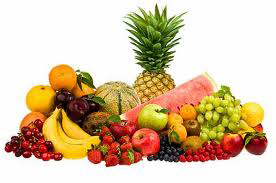 Madhur rasa predominant food: all kinds of sweeteners or sugar containing ingredients -‐ milk, fruits, grains, etc. This rasa predominant food will certainly increase blood sugar levels, and if anyone is experiencing issues with sugar metabolism, or is already clinically diagnosed as a diabetic, that person should not consume or should minimize the consumption of madhur rasa predominant food items. Consuming more madhur rasa while being on diabetic medication will create an antagonistic effect on the anti-‐diabetic drug and also put an unnecessary load on the organs through the effect of this fight.
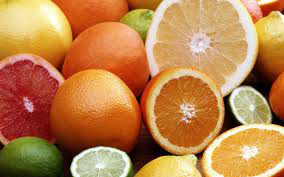 Amla rasa or sour taste predominant foods (For lime, lemon, citrus fruits, berries, apples, vinegar, fermented foods, tomatoes, etc.), even though natural and not synthetic, may interact with your medications in 2 specific ways. Lime may directly affect medications that are processed by the liver. Consuming lime may slow down the effects or completely block the effects of your medications.In addition,lime in particular, and sour foods in general, may also increase sensitivity to sunlight and interfere not only with medicine but with medical conditions such as vitiligo. Or another detail to consider is if anyone is taking anti-‐acid medication, they should avoid this amla rasa or sour predominant foods, as it will synergistically increase acidity or sourness in the stomach.
Salty rasa or lavan rasa has a “kledana” effect, a retentive property. Salt retains water in the body. That’s why salt can raise the blood pressure and is therefore not good for anyone, for example, 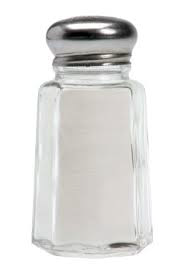 experiencing high blood pressure,or also kidney imbalances, renal failure, etc. The kidneys detox the fluids in our body and salt will put added pressure on their functioning. It is commonly known that anyone taking blood pressure medication may experience antagonistic interaction between his medication and the consumption of excess or improper salt. In addition, if anyone is on any diuretic medication, due to the antagonistic effect, the diuretic medicine may not work.
Pungent or Katu rasa food items such as chilies, black and all other kinds of pepper, ginger, garlic, etc: this taste is irritating to the stomach. In addition, it enhances the circulation in the micro-‐circulatory channels and certain pungent predominant spices and ingredients also thin the blood. So if anyone is taking any anti-‐ulcer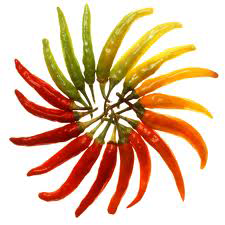 medication,they should not consume any pungent foods or ingredients, it will create an antagonistic interaction. Due to its channel opening properties, if an individual is taking vaso-‐dilating medicine, and consuming pungent foods, they can experience excessive vaso-‐dilation due to the compounded synergistic effect. Any individual taking blood thinners, if/when they consume certain pungent spices, such as: ginger, garlic, they can run the risk of thinning their blood further.
Tikt rasa or the bitter taste, normally stimulates the liver and pancreas, and detoxifies the blood. This rasa can, though synergistic interaction, lower blood sugar levels, leading an individual into unwanted hypoglycemia – too low blood sugar levels. When the bitter rasa awakens the detox processes of the body, any synthetic chemicals tat may be present – and most of modern medicine consists of synthetic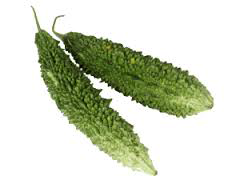 chemical molecules – will be seen as unwanted in the body. When someone is on medication and consumes the bitter taste in therapeutic doses, they are sending signals to their body to evacuate, detox these chemicals faster then they should be, creating an antagonistic interaction between the bitter taste and the medicines ingested, and leading the body to detox from the modern medicine that it needs at that particular point in time. In this situation, the medicine will either have less or zero effect on the body – it will be cancelled out by the bitter. Another example: one of the side-‐effects of the bitter taste can be nausea, so if an individual is on anti-‐nausea medicine, it can create an antagonistic interaction. Here is a brief list of predominant lybitter tasting foods/herbs/spices: neem, karela or bitter gourd, coffee and coffee bean, bitter drumsticks, bitter leafy greans, turmeric.
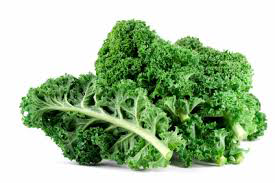 Kashai or astringent rasa: such as greens like Swiss chard, spinach, enhance absorption of nutrients in general, supporting the liver. Some greens though, the ones darker in color, also thicken the blood. So if an individual is taking any blood thinners, it can create an antagonistic interaction by thickening the blood.
So how should an ayurvedic practitioner deal with medical conditions, even as and when they work hand in hand with a medical physician? As you can see, it is not a good idea to avoid food or spices when they create a synergistic interaction. On the contrary, that synergistic power should be used to the benefit of the patient, to help gradually minimize the doses of medication, because in this case food materials will not have unwanted side-effects as they are managed wisely. In this situation, we are attempting to get the desired results from food materials and spices rather than medicine. But just as synergistic interaction is beneficial and can be tailored safely while working with an MD and getting testing regularly by a lab, antagonistic reactions should be avoided. This means: measures should be taken so that a diet should not create road- blocks for the medicine. Food or spices that can potentially reduce or block the effect of any drug should not be used and consumed. Dear Nancy, this is a big topic and a very pertinent question, here I tried to answer it as succinctly as possible. I hope to elaborate on this further in the futue. In the meantime, I hope this helps.
